
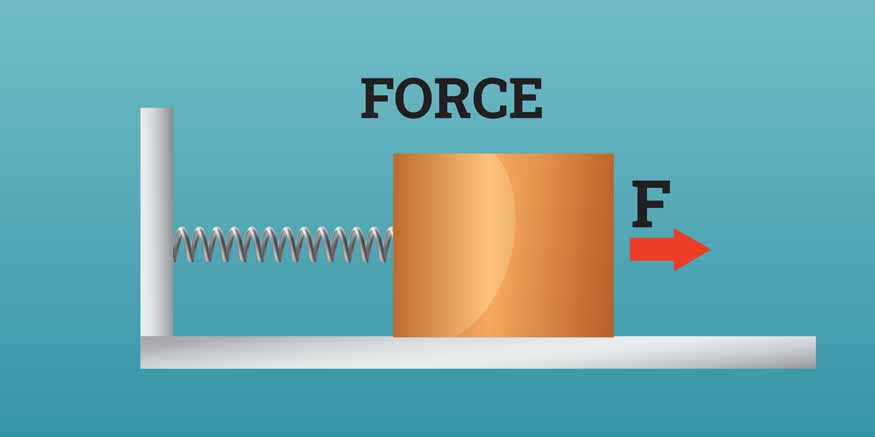
Description
📘 Form One Physics Notes – Introduction to Force: Concept of Force, Effects of Forces, Types of Forces & Mass vs. Weight | NECTA-Aligned Study Guide PDF
Master force the simple, exam-ready way — from push and pull to friction, gravity, magnetism, and the difference between mass and weight.
Written specifically for Tanzanian Form One students, this Physics study guide covers the Introduction to Force topic in clear, structured notes. From the concept of force as a vector quantity to its five effects and the two major categories of forces — every concept is explained with practical examples drawn from Tanzanian daily life, including kicking a football, braking a daladala, using a spring balance, and the Moon orbiting Earth.
✨ What’s Inside
✅ Concept of Force:
Clear definition — push or pull, interaction that changes motion, direction, shape, or size
Force is a Vector Quantity — magnitude + direction (with diagrams)
SI Unit of Force — Newton (N), named after Sir Isaac Newton
Everyday reference: 1 N ≈ weight of a small apple (100 g)
✅ Measuring Force: The Spring Balance:
Diagram with labelled parts — Pointer, Calibrated Scale (in N), Internal Spring, Hook, Load
How a Spring Balance Works — 4-step explanation (internal mechanism, hook, stretching, scale reading)
✅ Effects of Forces (Five Major Effects):
Effect 1: Force Can Make a Stationary Object Move (kicking a football, pushing a bicycle)
Effect 2: Force Can Stop a Moving Object (goalkeeper catching a ball, car brakes)
Effect 3: Force Can Change the Speed of a Moving Object (pedaling harder, walking against wind)
Effect 4: Force Can Change the Direction of a Moving Object (batsman in cricket, steering a car)
Effect 5: Force Can Change the Shape or Size of an Object (squeezing a sponge, stretching a rubber band)
✅ Types of Forces:
Category A: Contact Forces (require physical contact):
1. Frictional Force — definition, diagram, everyday examples, advantages, and disadvantages
2. Tension Force — tug-of-war, picture wire, pulling a bucket from a well
3. Normal (Reaction) Force — textbook on a desk, standing on a floor (with diagram)
4. Spring Force (Restoring Force) — ballpoint pen, trampoline, mattress
5. Air Resistance (Drag) — parachute, cycling downhill, birds streamlining
Category B: Non-Contact Forces (act at a distance):
1. Gravitational Force — definition, Weight = Mass × g, SI Unit Newton (N), everyday examples
Mass vs. Weight — full comparison table (definition, constancy, SI unit, instrument)
2. Magnetic Force — rules of magnetism (like poles repel, unlike poles attract), everyday examples
3. Electrostatic Force (Electric Force) — rules of static charges, rubbing a plastic pen, balloon on wool, lightning
Diagram: Types of Forces flow chart
✅ Revision Exercise 3 — full practice set:
Part A: Multiple-Choice Questions (5)
Part B: Short-Answer Questions (5)
Part C: Application & Discussion Questions (3 real-world scenarios — rolling ball on grass vs. ice, box on a table, comb and paper)
✅ Diagrams — Spring balance, friction direction, normal force, types of forces chart
🎯 Perfect For
Form One students studying Physics
NECTA exam preparation and revision
Teachers looking for ready-made teaching material
Parents helping their children study at home
Anyone who wants to understand force, friction, gravity, and magnetism
📥 How It Works
Purchase the notes
Download instantly (PDF)
Print it or study on any phone, tablet, or computer
⚠️ Please Note
This is a digital product (PDF). No physical book will be shipped.
🔑 Keywords
Form One Physics, NECTA notes, Introduction to Force, concept of force, push and pull, vector quantity, Newton, spring balance, effects of forces, types of forces, contact forces, non-contact forces, frictional force, tension force, normal force, spring force, air resistance, gravitational force, magnetic force, electrostatic force, mass vs weight, weight formula, W = mg, Tanzanian secondary school notes, Form 1 study guide, Physics PDF, NECTA revision




Reviews
There are no reviews yet.