
Description
📘 Form One Physics Notes – Work, Energy, and Power: Concept of Work, Forms of Energy, Energy Transformations, Conservation of Energy & Power Calculations | NECTA-Aligned Study Guide PDF
Master work, energy, and power the simple, exam-ready way — from the work formula and kinetic energy to power ratings and energy transformations.
Written specifically for Tanzanian Form One students, this Physics study guide covers the Work, Energy, and Power topic in clear, structured notes. From the concept of scientific work and the three conditions necessary for work to be done, to the nine forms of energy, energy transformations, conservation of energy, and power calculations — every concept is explained with practical examples drawn from Tanzanian daily life, including pushing a wheelbarrow, lifting a bucket from a well, carrying a load on your head, hydroelectric power plants, and engine ratings.
✨ What’s Inside
✅ Concept of Work:
Clear definition — work is done when a force causes displacement in the direction of the force
Diagram: Applied force and movement/displacement
Three Conditions Necessary for Work:
Force must be applied (F > 0)
Object must undergo displacement (s > 0)
Displacement must be in the direction of the applied force
Formula and SI Unit: W = F × s | SI Unit: Joule (J) | 1 J = 1 N·m
Work Done vs. No Work Done — full comparison:
Work IS Done: Pushing a trolley, lifting a bucket from a well, pulling a lawnmower
No Work is Done: Pushing a solid wall, holding a heavy suitcase, walking horizontally with a bag on your head (force is vertical, motion is horizontal: 90° angle)
Work Done Against Gravity: W = mgh
Step-by-Step Worked Examples (3):
Horizontal Work: Farmer pushes wheelbarrow with 50 N over 4 m → 200 J
Work Against Gravity: Girl lifts 10 kg bucket from a 2 m well → 200 J
Zero Work Case: Student pushes a brick wall with 100 N for 10 s → 0 J
✅ Concept of Energy:
Clear definition — capacity to do work
Nine Forms of Energy:
Kinetic Energy (K.E) — K.E = ½mv² (speeding bullet, galloping horse, wind turbine)
Gravitational Potential Energy (G.P.E) — G.P.E = mgh (water behind a dam, boulder on a cliff)
Elastic Potential Energy (E.P.E) — stretched catapult, compressed mattress spring, wound-up watch
Chemical Energy — food, dry-cell batteries, fossil fuels
Heat (Thermal) Energy — boiling kettle, hot tea, steam engines
Light Energy — sunlight, glowing LED bulb, candle flame
Sound Energy — beat drum, human speech, guitar strings
Electrical Energy — lightning bolts, electricity in house wires
Nuclear Energy — Sun’s core (fusion), nuclear power plants (fission)
Real-Life Energy Transformations (Conversions):
Filament Light Bulb: Electrical → Light + Heat
Moving Automobile Engine: Chemical → Kinetic + Heat + Sound
Microphone: Sound → Electrical
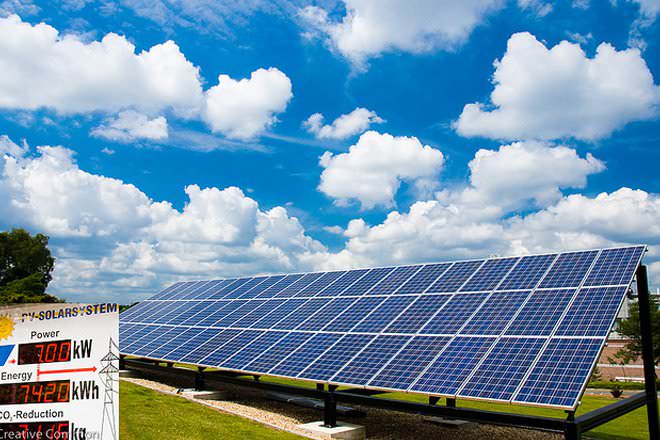
Solar Panel: Light → Electrical
Hydroelectric Power Plant: G.P.E → K.E (flowing down) → K.E (spinning turbine) → Electrical
Flashlight/Torch: Chemical (Battery) → Electrical → Light + Heat
Step-by-Step Worked Examples (3):
Kinetic Energy: 800 kg vehicle at 20 m/s → 160,000 J (160 kJ)
Gravitational Potential Energy: 15 kg bucket at 8 m → 1,200 J
Energy Conservation during Free Fall: 2 kg stone from 20 m → K.E at impact = 400 J
Diagram: Top (G.P.E) → Falling (G.P.E transforms into K.E) → Bottom (All K.E)
✅ Concept of Power:
Clear definition — rate at which work is done or energy is transferred
Formulas:
P = W / t (Work / Time)
P = E / t (Energy / Time)
P = F × v (Force × Velocity)
SI Unit: Watt (W) | 1 W = 1 J/s
Other Common Units: Kilowatt (kW), Megawatt (MW), Horsepower (hp ≈ 746 W)
Everyday Examples of Power:
Light Bulbs (100 W vs. 10 W LED)
Running vs. Walking up stairs
Engine Ratings (tractor vs. motor scooter)
Step-by-Step Worked Examples (3):
Basic Power: 2000 J in 10 s → 200 W
Lifting Load Power: 50 kg slab, 6 m, 4 s → 750 W
Using P = F × v: 500 N at 20 m/s → 10,000 W = 10 kW
✅ Revision Exercise 9 — full practice set:
Part A: Multiple-Choice Questions (5)
Part B: Short-Answer Questions (5)
Part C: Calculation Questions (5 — work done, G.P.E, K.E, conservation of energy, power output)
Part D: Application & Discussion Questions (2 — Physics of Carrying Loads, Comparing Acceleration & Power)
✅ Diagrams — Work status chart, applied force and displacement
🎯 Perfect For
Form One students studying Physics
NECTA exam preparation and revision
Teachers looking for ready-made teaching material
Parents helping their children study at home
Anyone who wants to understand work, energy, power, and energy transformations
📥 How It Works
Purchase the notes
Download instantly (PDF)
Print it or study on any phone, tablet, or computer
⚠️ Please Note
This is a digital product (PDF). No physical book will be shipped.
🔑 Keywords
Form One Physics, NECTA notes, Work Energy and Power, concept of work, scientific work, work formula, W = Fs, Joule, work against gravity, W = mgh, kinetic energy, K.E = ½mv², gravitational potential energy, G.P.E = mgh, elastic potential energy, chemical energy, heat energy, light energy, sound energy, electrical energy, nuclear energy, energy transformations, conservation of energy, power, P = W/t, P = Fv, Watt, kilowatt, megawatt, horsepower, energy conversion, Tanzanian secondary school notes, Form 1 study guide, Physics PDF, NECTA revision



Reviews
There are no reviews yet.