
Description
📘 Chapter Two: The Solar System – Form 1 Study Guide
Explore Our Place in the Universe with This Complete, Tanzania-Focused Geography Resource
🌌 What Is This Chapter About?
This chapter takes students on a journey through our solar system — from the sun at its center to the planets, moons, asteroids, comets, and meteors that orbit it. It also explores Earth’s unique characteristics, its movements, and how these affect our daily lives, seasons, and time.
✅ What You’ll Learn Inside
🔹 The Concept of the Solar System
Origin of the word “solar” (from Greek “sol” meaning sun)
Definition of the solar system and how gravity holds it together
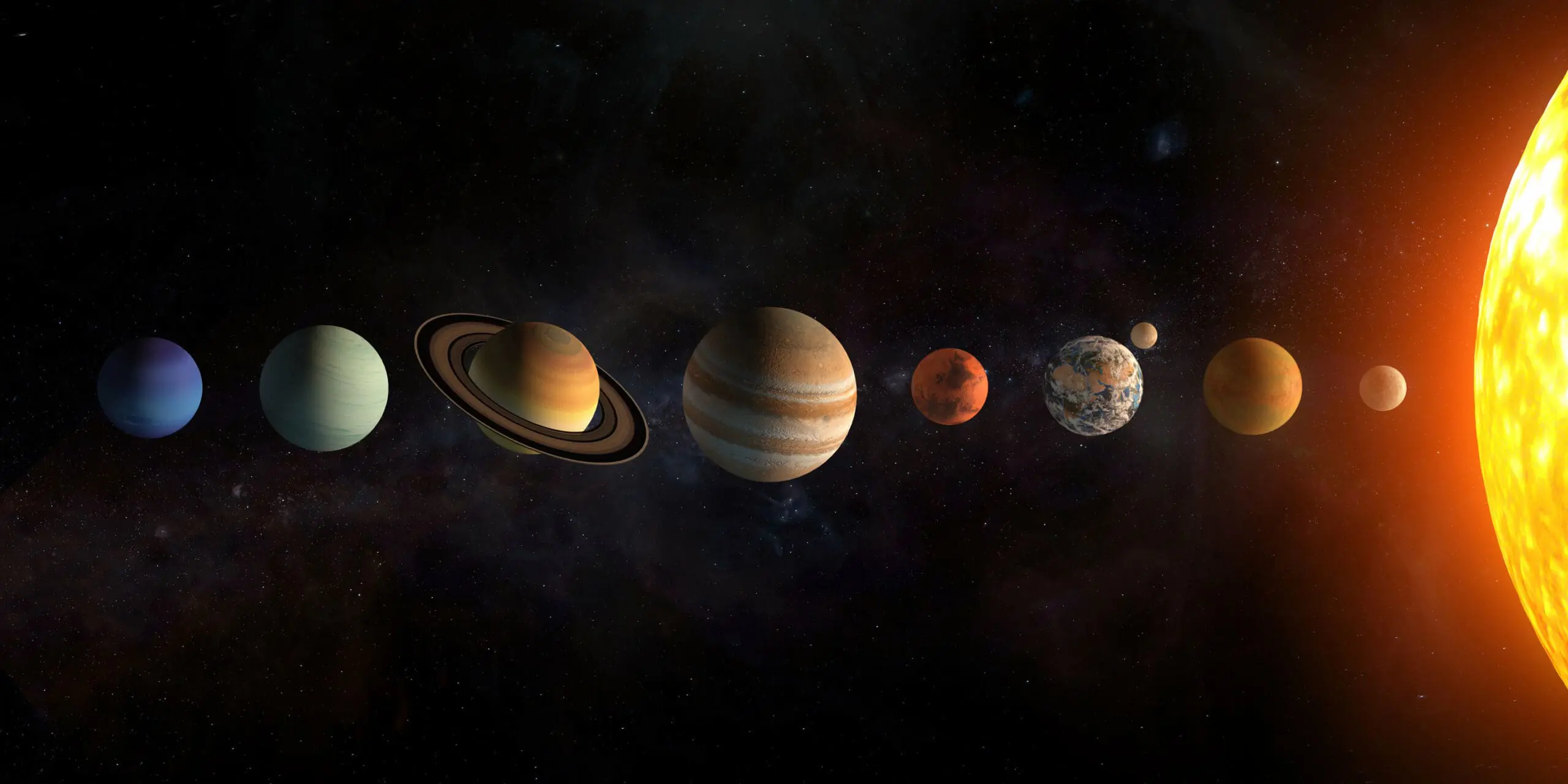
The eight planets in order: Mercury, Venus, Earth, Mars, Jupiter, Saturn, Uranus, Neptune
What an orbit is and why planets don’t collide
🔹 Components of the Solar System & Their Importance
The Sun – Composition (75% hydrogen, 23% helium), temperature (6,000°C), and its role as the primary source of light and heat
The Planets – Detailed features of each planet, including:
Mercury (smallest, hottest)
Venus (hottest due to greenhouse gases)
Earth (only planet supporting life, 15°C average)
Mars (the “Red Planet”)
Jupiter (largest, 79 moons)
Saturn (famous rings)
Uranus (rotates on its side)
Neptune (deep blue, strong winds)
The Moon – Earth’s only natural satellite, responsible for tides
Other Bodies – Asteroids, meteors, meteorites, comets, and artificial satellites
Tanzania Connection – The famous Mbozi meteorite (Songwe Region) and the Malampaka meteorite (Simiyu Region, 1930)
🔹 Solar Energy
Definition and how energy reaches Earth through radiation
Uses: domestic (drying), health (Vitamin D), agriculture (photosynthesis), weather (water cycle), electricity (solar panels), cooking (solar ovens)
Environmental Conservation – Reducing deforestation and air pollution
Women’s Emancipation – Saving time, improving health, reducing risks, and saving money
🔹 The Earth
Shape – Oblate spheroid (geoid), bulging at the equator
Evidence of Spherical Shape – Sunrise/sunset differences, circumnavigation (Magellan), aerial photographs, ship’s visibility, lunar eclipse, curved horizon
🔹 Earth’s Movements
Rotation – Spinning on its axis (west to east, 24 hours), causing:
Day and night
Time differences
Deflection of winds and ocean currents (Coriolis Effect, Ferrel’s Law)
Tides
Revolution – Orbiting the sun (365 days), causing:
Seasons (Summer, Autumn, Winter, Spring)
Aphelion (July 4th) and Perihelion (January 3rd)
Eclipses (Solar and Lunar)
Solstices and Equinoxes
Varying lengths of day and night
🔹 Parallels and Meridians
Latitudes (Parallels) – Equator, Tropic of Cancer, Tropic of Capricorn, Arctic and Antarctic Circles
Longitudes (Meridians) – Prime Meridian (Greenwich), International Date Line (IDL)
Great Circles – Shortest distance between two points, used in navigation
Importance – Location, climate, time, and navigation
🔹 Calculation of Local Time
Principle: Earth rotates 15° per hour, 1° in 4 minutes
Formula: Difference in Time = Difference in Longitude × 4 minutes
Worked Examples:
Finding time (Tunis vs. Mombasa)
Finding longitude (Mogadishu vs. Tunis)
🎯 Key Features
10 Clear Summary Points for quick revision
5 Short-Answer Questions to test understanding
10 Structured Questions for deeper analysis
5 Essay Questions for critical thinking and exam preparation
Real Tanzanian Examples throughout — Mbozi meteorite, Rujewa solar eclipse (2016), solar panels in rural Tanzania
Step-by-Step Calculations for local time and longitude
👨🎓 Who Is This For?
Form 1 Students beginning their secondary geography course
Teachers looking for a well-structured, ready-to-use teaching resource
Parents supporting their children’s learning at home
Anyone preparing for national examinations (NECTA)
💡 Why Choose This Guide?
✔ Aligned with the Tanzanian secondary school syllabus
✔ Written in clear, simple English for easy comprehension
✔ Packed with local examples students can relate to
✔ Includes practice questions with varying difficulty levels
✔ Perfect for classroom teaching, self-study, and revision
✔ Covers cross-topic connections (e.g., link to Chapter 1: Geography)
📥 Get Your Copy Today!
Whether you’re a student aiming for top marks, a teacher preparing engaging lessons, or a parent investing in your child’s academic success — Chapter Two: The Solar System is your essential companion for mastering the wonders of our universe.
Start your journey through the solar system today!



Reviews
There are no reviews yet.