
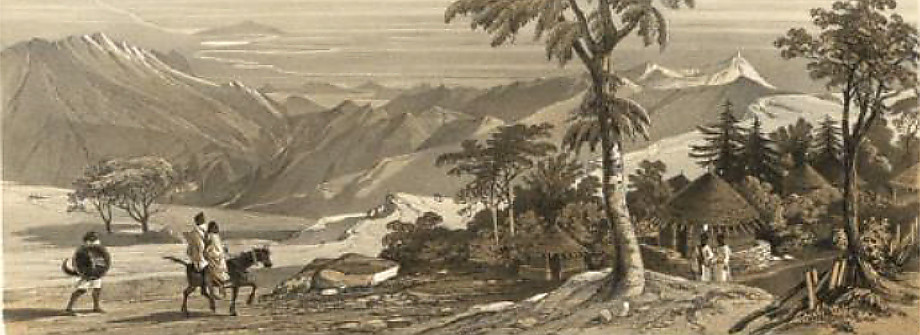
Description
📘 Topic 3: Production and Social Organisation in Pre-Colonial Africa – Form 1 Study Guide
Explore How Pre-Colonial African Societies Organised Themselves for Production and Survival
🏛️ What Is This Topic About?
This topic examines how pre-colonial African societies developed by exploring the key concepts related to how people organized themselves to produce goods and services. It covers the concepts of social organisation and economic production, the key concepts in production, and the three main pre-colonial modes of production — communalism, slavery, and feudalism — with detailed examples from Tanzania and Africa.
✅ What You’ll Learn Inside
🔹 Concepts of Social Organisation and Economic Production
Social Organisation – How people and groups in a society interact in the process of material production; assignment of duties according to positions in society
Economic Production – The process of producing goods and services to meet human needs; creating economic value from raw materials (e.g., crop cultivation, cloth-making, iron-working)
🔹 Key Concepts in Production
Instruments of Labour – All tools used by human beings in the production process (e.g., hand hoes, axes, tractors, computers)
Human Labour – Physical and mental energy used to produce what people want
Physical Labour – Physical energy used in production
Mental Labour – Knowledge and skills used during production
Productive Forces – The combination of instruments of labour and human labour
Objects of Labour – Anything on which human labour is applied to produce goods (e.g., land, rivers, forests, mineral deposits)
Means of Production – The combination of human labour, instruments of labour, and objects of labour
Relations of Production – The kinds of relationships people enter into to produce goods and services (exploitative or non-exploitative)
Mode of Production – The combination of productive forces and relations of production
🔹 Pre-Colonial Modes of Production
Pre-colonial African societies passed through three main modes of production, though not all societies passed through all three stages.
A. Communalism (Primitive Communalism)
Definition – The first mode of production, based on collective ownership of the major means of production and equal distribution of gains
Characteristics:
Collective ownership of land, forests, and water bodies
No exploitation – all worked together for a common goal
Production for immediate consumption
Simple division of labour based on gender and age
Examples of Societies:
Hunter-Gatherers: Hadzabe and Sandaw (Tanzania), Mbuti (Congo), San (Kalahari)
Pastoralists: Maasai (Tanzania/Kenya), Fulani (Nigeria), Karamojong (Uganda)
Transition – Iron technology led to increased production, surplus, private ownership, and the emergence of classes
B. Slave Mode of Production
Definition – The first exploitative mode of production, based on private ownership of the means of production, including slave labour
How People Became Slaves:
Failure to pay debts
Criminal offences
War captives
Inheritance
Self-sale or sale of dependents
Features of Slavery:
Class division (free people vs. enslaved people)
Exploitation of slave labour
Rise of states
Areas that Practised Slavery – Ancient Egypt and some East African coastal societies
C. Feudal Mode of Production
Definition – The third mode of production and second exploitative mode, based on private ownership of land and cattle
Origins and Development – Developed in societies with political centralisation; powerful kings owned and controlled land, distributed to chiefs, who rented to peasants
Types of Rent:
Labour Rent – Peasants worked on the landlord’s land
Rent in Kind – Peasants gave a portion of their produce
Money Rent – Peasants paid cash
Examples of Feudal Societies in Pre-Colonial Africa:
The Interlacustrine Region (Area between the Great Lakes):
Kingdoms: Buganda, Bunyoro, Karagwe, Buhaya, Rwanda, Burundi
Land-based feudalism: Buganda and Buhaya
Cattle-based feudalism: Rwanda and Burundi (Tutsi pastoralists vs. Hutu agriculturalists)
The Coast of East Africa (Zanzibar):
System: Umwinyi
Structure: Mwinyi Mkuu (overall feudal lord), Sheha or Diwani (vassals), Shakua (tax collectors), Wavvale or Wazale (religious leaders)
Other Feudal States:
North-Eastern Africa: Egypt, Axum, Nubia, Ethiopia
West Africa: Ghana, Mali, Songhay, Asante, Oyo, Benin, Dahomey
Central Africa: Mwenemutapa, Lunda
Features of Feudalism:
Private ownership of major means of production
Exploitative relations
Presence of classes (landlords vs. serfs/tenants)
Division of labour and specialisation
Advanced productive forces (iron tools)
🎯 Key Features
10 Clear Summary Points for quick revision
5 Short-Answer Questions to test understanding
5 Structured Questions for deeper analysis
5 Essay Questions for critical thinking and exam preparation
Real Tanzanian Examples throughout — Hadzabe, Sandaw, Maasai, Zanzibar’s Umwinyi system, Buganda, Karagwe, Buhaya
Comparison Tables for the three modes of production
Detailed Explanation of key production concepts
Focus on the Role of Iron Technology in social transformation
👨🎓 Who Is This For?
Form 1 Students beginning their secondary history course
Teachers looking for a well-structured, ready-to-use teaching resource
Parents supporting their children’s learning at home
Anyone preparing for national examinations (NECTA)
💡 Why Choose This Guide?
✔ Aligned with the Tanzanian secondary school syllabus
✔ Written in clear, simple English for easy comprehension
✔ Packed with local examples students can relate to
✔ Includes practice questions with varying difficulty levels
✔ Perfect for classroom teaching, self-study, and revision
✔ Covers cross-topic connections (links to Topics 1 and 2)
📥 Get Your Copy Today!
Whether you’re a student aiming for top marks, a teacher preparing engaging lessons, or a parent investing in your child’s academic success — Topic 3: Production and Social Organisation in Pre-Colonial Africa is your essential companion for understanding how African societies organized themselves for production and survival.
Start exploring pre-colonial African societies today!
MITIHANI POPOTE — Quality educational resources wherever you are.




Reviews
There are no reviews yet.