
Description
📘 Topic 6: Social, Political and Education Systems in Pre-Colonial Africa – Form 1 Study Guide
Discover How African Societies Organised Themselves Without Centralised Governments
🏛️ What Is This Topic About?
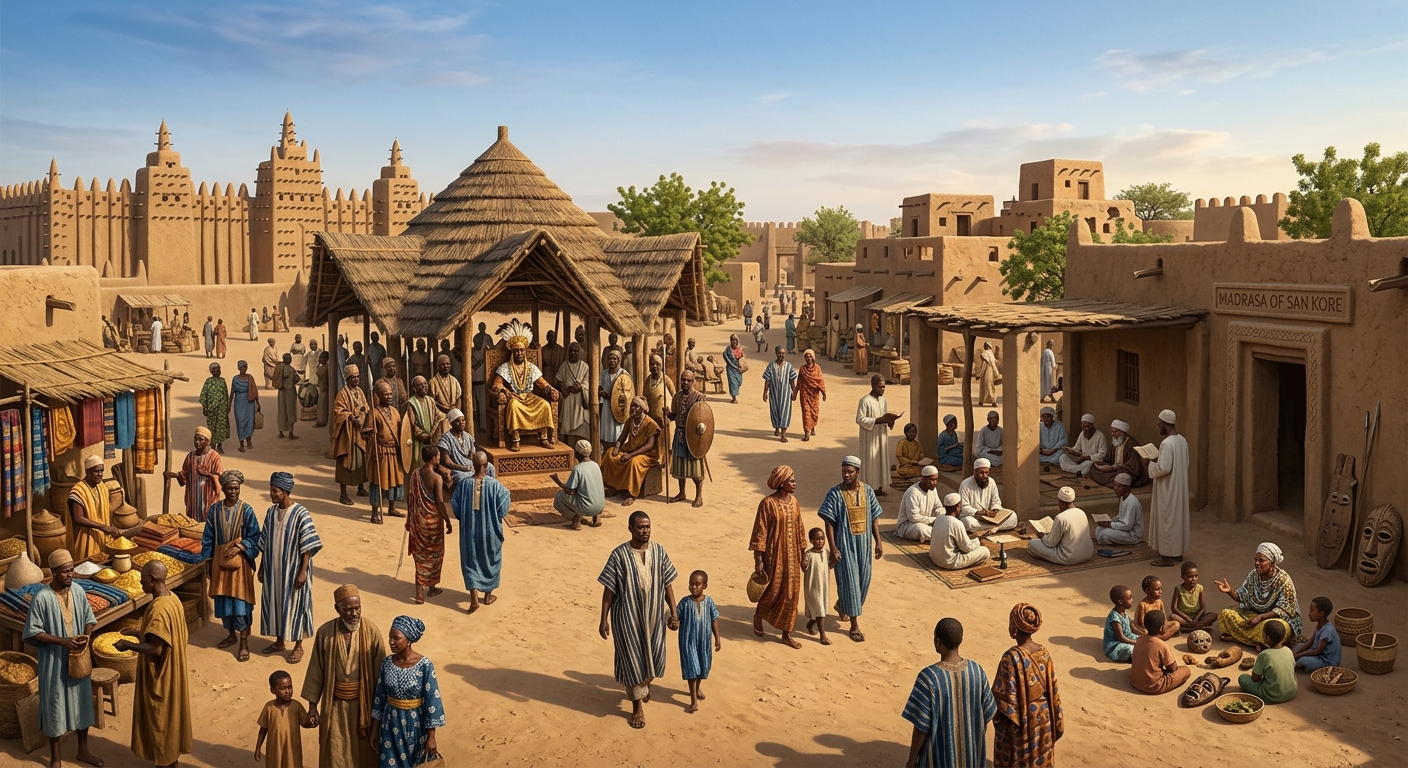
This topic explores the social, political, and educational systems that existed in pre-colonial Africa. It covers the definition of a system, the non-centralised political systems (clan/kinship organisation and the age-set system), and the education system in pre-colonial African societies — including its aims, characteristics, and weaknesses. It highlights how societies organised themselves without centralised governments, with detailed examples from Tanzania.
✅ What You’ll Learn Inside
🔹 Introduction to Systems
Definition of a System – A set of objects or things arranged in such a way that they are interrelated to perform a specific function
Political System – Describes power relations among people and societies
Social System – A set of rules, structures, and beliefs guiding human interactions
Education System – The pattern of knowledge and skills the society transfers from one generation to another
Key Observation – Development varied from one society to another due to geographical location and technological development
🔹 Non-Centralised Political Systems
Definition – A form of organisation with no central authority (no single king or ruler)
Characteristics:
No central ruler – Political leaders were mainly clan heads
Shared authority – Power shared among council of elders and clan heads
Classless societies – No distinct social classes based on wealth or power
A. Clan or Kinship Organisation
Definition – A type of social and political organisation involving closely related families with the same or common ancestor
Basic Unit – The family (husband, wife/wives, children, grandparents, extended relatives)
Types of Kinship:
Type Definition Examples in Africa Characteristics
Patrilineal People trace their kin through their fathers Luo (Kenya/Tanzania), Zulu (South Africa), Ndebele (Zimbabwe), Ngoni (Zambia/Tanzania) Men dominate social, economic, and political decisions; own and control land; decide on bridewealth
Matrilineal People trace their kin through their mothers Luguru (Morogoro), Yao (Lindi/Mtwara), Makonde (Lindi/Mtwara), Bemba (Zambia), Ashanti (Ghana) Maternal uncles make important decisions; fathers have limited power; inheritance based on mother’s clan
Features of Clans:
Common rituals and customs
Self-governing – No rulers or kings
Small and simple – Low levels of economic and technological development
Sufficient land – Less competition for resources
Social, Political and Economic Organisation of Clans:
Economic – Land belonged to the whole clan; tools belonged to individual families; products shared according to needs
Political – Clan heads and councils of elders regulated relations, settled disputes, arranged marriages, allocated land
Social – Settled communities; closeness enhanced by rituals, taboos, and customs
B. Age-Set System
Definition – A form of social and political organisation where division of labour and social responsibilities was based on age and sex
Common Among – Pastoral, agro-pastoral, and some agricultural societies
Organisation:
No central authority – Leadership by council of elders
Age groups – Children of the same age initiated together, given a group name, performed special duties
Seniority – Based on age, wisdom, and good character
Environment – Pastoralists lived in arid and semi-arid areas, moved constantly
Examples – Maasai (Tanzania/Kenya), Berbers and Tuaregs (North Africa), Fulani and Hausa (West Africa), Somali (North-Eastern Africa), Karamojong (Uganda), Khoikhoi (Southern Africa)
Division of Labour among the Maasai (Example):
Group Age Range Duties and Responsibilities
Women and Children All ages Stayed and worked at home; cooked food; milked cows; grazed calves; cared for children
Youth (Junior) 9–18 years Involved in livestock grazing during the afternoon; assisted mothers with household duties
Youth (Moran) 15–25 years Defended the community from enemies; protected livestock from thieves and wild animals; raided neighbouring herds; drove cattle to new grazing land; collected tribute from traders; surveyed for pastures and water sources
Senior Age Group 40 years and above Respected by all; owned cattle; most senior member was called laibon (cultural, political, and religious authority); head of the council of laibons was called Laigwanan
Age-Set Organisation in Agricultural Communities:
Example: The Nyakyusa of Tanzania
Reason: To prevent overpopulation in small areas, the youth of a specific age group were allocated a new piece of land to occupy and establish their own settlement
Leadership: Each age village was headed by a leader called amafumu
Ceremony: Ubusoka marked the passage into adulthood
Other Examples: The Rendile of northern Kenya also practised age-set organisation
🔹 Education System in Pre-Colonial African Societies
Definition – A lifelong process of transmitting and imparting knowledge, skills, values, norms, and experiences from one generation to another through active participation and observation
Aims of Pre-Colonial Education
Impart Knowledge and Skills – To prepare the youth for future careers (fishing, farming, hunting, iron-working) through learning by doing
Transmit Social Values – To impart good morals, norms, and values
Develop Character – To develop children’s character, physical strength, and intellectual abilities
Promote Peace and Security – To train the youth to defend their societies (e.g., Maasai Moran)
Prepare Future Leaders – To prepare the youth to take over leadership roles
Foster Patriotism – To instill a sense of pride in their people, environment, and resources
Characteristics of Pre-Colonial Education
Practical (Learning by Doing) – Hands-on education
Lacked Uniformity – Varied from one society to another
Valuable and Relevant – Contained positive elements that shaped culture
Not Class-Biased – Provided to all members regardless of wealth or status
Not Financially Motivated – Instructors were not paid; motivated by responsibility
Emphasised Good Morals – Taught good character, hard work, and desirable behaviour
Weaknesses of Pre-Colonial Education
Unnecessary Customs – Some customs and traditions taught were unnecessary
Undermined Women’s Rights:
A widow could not inherit her husband’s wealth
Women were not allowed to eat certain foods (eggs, milk, liver)
Women were not allowed to learn iron-working in iron-working societies
🎯 Key Features
10 Clear Summary Points for quick revision
5 Short-Answer Questions to test understanding
5 Structured Questions for deeper analysis
5 Essay Questions for critical thinking and exam preparation
Real Tanzanian Examples throughout — Luguru matrilineal system, Maasai age-set system, Nyakyusa age villages, Moran warriors, laibon and Laigwanan
Comparison Tables for patrilineal vs. matrilineal kinship and Maasai division of labour
Detailed Explanation of non-centralised political systems
Focus on the Strengths and Weaknesses of pre-colonial education
👨🎓 Who Is This For?
Form 1 Students beginning their secondary history course
Teachers looking for a well-structured, ready-to-use teaching resource
Parents supporting their children’s learning at home
Anyone preparing for national examinations (NECTA)
💡 Why Choose This Guide?
✔ Aligned with the Tanzanian secondary school syllabus
✔ Written in clear, simple English for easy comprehension
✔ Packed with local examples students can relate to
✔ Includes practice questions with varying difficulty levels
✔ Perfect for classroom teaching, self-study, and revision
✔ Covers cross-topic connections (links to Topics 1, 3, 4, and 5)
📥 Get Your Copy Today!
Whether you’re a student aiming for top marks, a teacher preparing engaging lessons, or a parent investing in your child’s academic success — Topic 6: Social, Political and Education Systems in Pre-Colonial Africa is your essential companion for understanding how African societies organised themselves without centralised governments.
Start exploring pre-colonial African systems today!
MITIHANI POPOTE — Quality educational resources wherever you are.



Reviews
There are no reviews yet.