
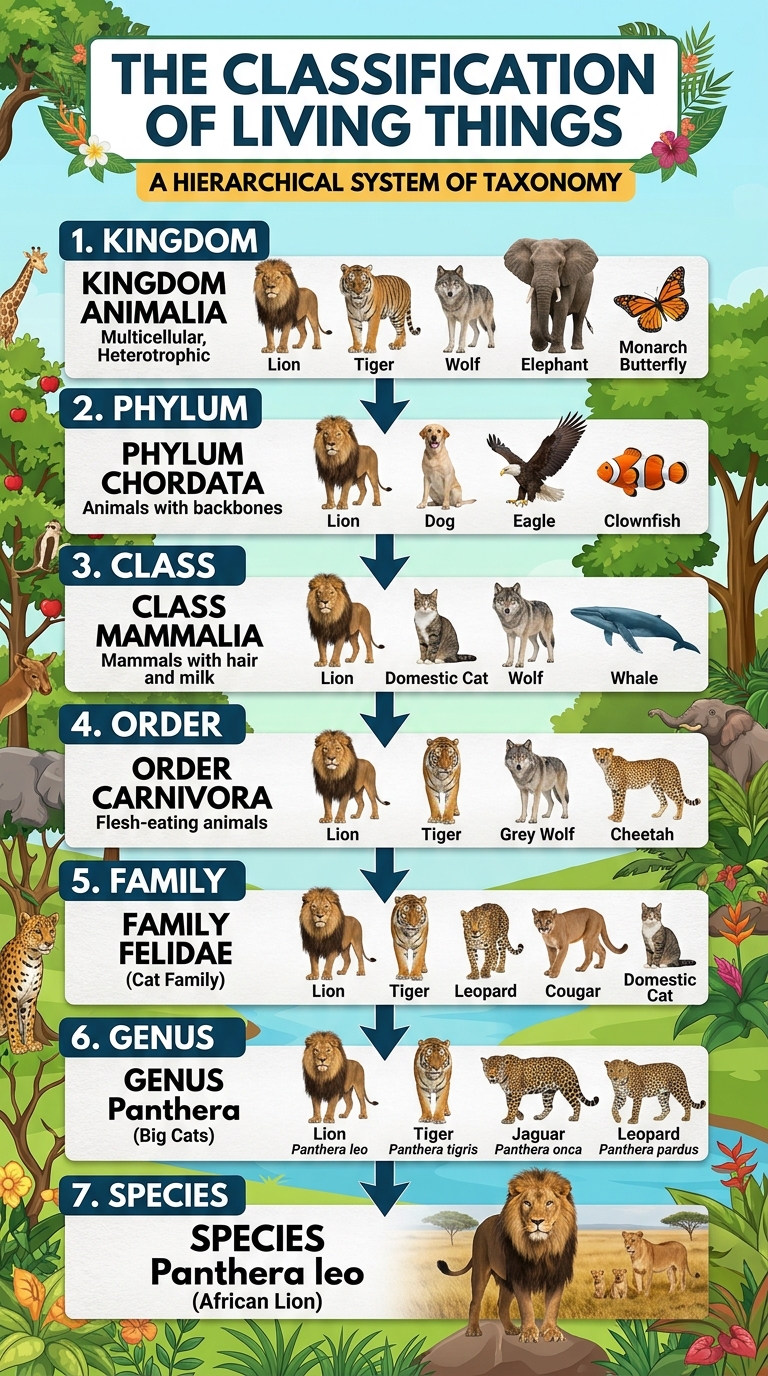
Description
Master the Classification of Living Things – Your Complete F4 Biology Guide to Understanding Animal Diversity!
Do you struggle to tell the difference between vertebrates and invertebrates? Want to learn how animals are classified into phyla and classes, and how to answer exam questions with confidence? This all-in-one study guide is exactly what you need! Specially designed for Form Four (F4) students, it covers every skill required to master the Classification of Living Things chapter—from Kingdom Animalia to the five major phyla, with detailed diagrams, Tanzanian examples, and exam-style questions.
What’s Inside?
Kingdom Animalia: Understand the general features of animals—eukaryotic, multicellular, heterotrophic, mobile, bilaterally symmetrical, triploblastic, and more. Learn the difference between vertebrates (with backbone) and invertebrates (without backbone).
Phylum Platyhelminthes (Flatworms): Dive deep into the world of flatworms:
General features: Dorso-ventrally flattened, acoelomate, flame cells, hermaphrodites, incomplete digestive system.
Classes: Turbellaria (Planaria), Monogenea (Dactylogyrus), Trematoda (Fasciola hepatica, Schistosoma), Cestoidea (Taenia solium, Taenia saginata).
Detailed structure of a liver fluke and tapeworm.
Economic importance: Diseases like taeniasis, fascioliasis, and schistosomiasis.
Phylum Nematoda (Roundworms): Learn about round, cylindrical, unsegmented worms:
General features: Pseudocoelomate, dioecious, complete digestive system, cuticle made of collagen.
Structure of Ascaris lumbricoides (male and female).
Economic importance: Diseases like elephantiasis, river blindness, ascariasis; biological control of pests.
Phylum Annelida (Segmented Worms): Discover ringed or segmented worms:
General features: Metameric segments, chaetae for locomotion, closed circulatory system, eucoelomate.
Classes: Polychaeta (ragworms, lugworms), Oligochaeta (earthworms), Hirudinea (leeches).
Structure of an earthworm.
Economic importance: Soil aeration, vermicomposting, fishing bait, pollutant removal.
Phylum Arthropoda (Jointed Appendages): Explore the most successful phylum on Earth:
General features: Jointed appendages, chitinous exoskeleton, tagmata (head, thorax, abdomen), open circulatory system.
Classes: Crustacea (crabs, prawns), Arachnida (spiders, scorpions, ticks), Chilopoda (centipedes), Diplopoda (millipedes), Insecta (grasshoppers, butterflies, bees).
Detailed structures of a crab, spider, centipede, millipede, and grasshopper.
Economic importance: Pollination, pest control, disease vectors, crop destruction.
Phylum Chordata: Learn about animals with a notochord:
General features: Notochord, pharyngeal gill slits, post-anal tail, dorsal hollow nerve cord.
Classes: Chondrichthyes (sharks, rays), Osteichthyes (tilapia, catfish), Amphibia (frogs, toads), Reptilia (lizards, snakes, crocodiles), Aves (birds), Mammalia (humans, cattle, bats).
Detailed structures of a shark, tilapia, toad, lizard, pigeon, and mouse.
Economic importance of each class with Tanzanian examples.
Tanzanian Examples Throughout: Cartilaginous fish in Tanzanian waters, Kihansi Spray Toad, Quelea quelea (crop pest), and more.
Comprehensive Revision Questions: Over 30 questions covering:
Section A: Short answer questions
Section B: Structured questions with diagrams
Section C: Essay questions for deeper understanding
Clear Diagrams: Text-based representations of Planaria, liver fluke, tapeworm, Ascaris, earthworm, crab, spider, centipede, millipede, grasshopper, shark, tilapia, toad, lizard, pigeon, mouse, and more.
Why Choose This Guide?
✅ Comprehensive: Covers all key areas of the F4 Biology syllabus on Classification.
✅ Easy to Follow: Clear explanations and step-by-step diagrams make complex concepts simple.
✅ Exam-Focused: Packed with practice questions and model answers to boost your confidence.
✅ Relevant Examples: Uses Tanzanian animal species and diseases to connect learning to real life.
Whether you are a student preparing for national exams, a teacher looking for a ready-made teaching resource, or a parent supporting your child’s education, this guide is your ultimate companion for Biology success.
Don’t just learn Biology—master it. Grab your copy today and start understanding the classification of living things with clarity and confidence!
MITIHANI POPOTE-Quality resources




Reviews
There are no reviews yet.