
Description
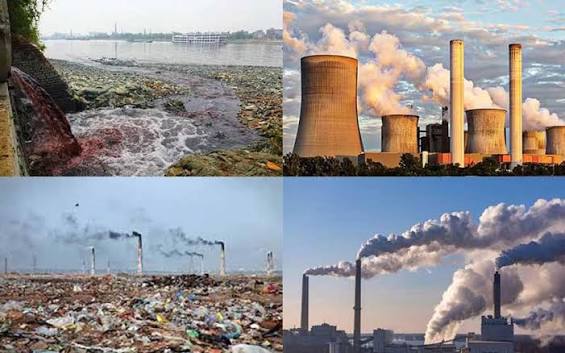
Master Pollution – Your Complete F4 Chemistry Guide to Understanding and Combating Environmental Pollution!
Do you struggle to understand the different types of pollution, their chemical causes, and how to control them? Want to learn how to answer NECTA exam questions on pollution with confidence? This all-in-one study guide is exactly what you need! Specially designed for Form Four (F4) students, it provides simple, direct, and exam-focused notes to help you excel in your NECTA CSEE Examinations.
What’s Inside?
Fundamental Definitions: Understand the difference between pollution, pollutant, and contaminant. Learn how pollutants are classified:
By Persistence: Biodegradable vs. Non-biodegradable
By Origin: Natural vs. Man-made (Anthropogenic)
By State: Solid, Liquid, Gaseous
Primary vs. Secondary Pollutants
Bioaccumulation and Biomagnification: Learn how non-biodegradable pollutants like DDT and mercury accumulate in living tissues and magnify up the food chain—with a step-by-step diagram and real-world examples (DDT in eagles, methylmercury in tuna).
Section 2: Land Pollution:
Major causes: Agricultural chemicals, industrial wastes, mining operations, domestic solid waste, deforestation.
Chemical nature of common land pollutants: Heavy metals (Pb²⁺, Hg²⁺, Cd²⁺, Cr⁶⁺), synthetic pesticides (organochlorines, organophosphates), and synthetic polymers (plastics).
Effects: Loss of soil fertility, human health risks (cadmium causes bone softening, lead impairs neurological development), ecosystem degradation.
Control methods: Integrated waste management, recycling, composting, bioremediation, and phytoremediation (using hyperaccumulating plants like Brassica juncea).
Section 3: Water Pollution:
Major causes: Industrial effluents, untreated municipal sewage, agricultural runoff, oil spills, thermal pollution.
Key chemical concepts: BOD (Biochemical Oxygen Demand) and COD (Chemical Oxygen Demand) — learn the difference and why COD is always higher.
Eutrophication: The complete step-by-step chemical process from nutrient enrichment to algal bloom, oxygen depletion, and aquatic dead zones.
Heavy Metal Contamination: Minamata disease (mercury poisoning) and lead poisoning (plumbism).
Water Treatment and Purification: Learn the six steps—Screening, Coagulation & Flocculation (with aluminum sulfate and slaked lime), Sedimentation, Filtration, Chlorination (with full chemical equations), and Boiling.
Section 4: Air Pollution:
Major air pollutants: Carbon Monoxide (CO), Carbon Dioxide (CO₂), Sulfur Dioxide (SO₂), Nitrogen Oxides (NOₓ), Volatile Organic Compounds (VOCs), Ground-Level Ozone (O₃), and Particulate Matter (PM₂.₅ and PM₁₀).
Chemical sources and reactions with full balanced equations.
Environmental effects: Acid Rain (pH below 5.6) — corrosion of limestone and marble buildings, corrosion of metals, soil and aquatic acidification. Carbon Monoxide Poisoning — how CO binds to hemoglobin 200 times more strongly than oxygen, forming carboxyhemoglobin.
Section 5: Noise Pollution: Learn the definition, major sources, measurement in decibels (dB), effects on human health (hearing loss, hypertension, tinnitus), and control methods (soundproofing, greenbelts, mufflers, noise zoning laws).
Section 6: Global Warming:
Definitions and distinctions between global warming and climate change.
The Natural vs. Enhanced Greenhouse Effect with a detailed diagram.
Major Greenhouse Gases (GHGs): CO₂, CH₄, N₂O, CFCs — with their sources and Global Warming Potential (GWP).
Environmental and economic impacts: Thermal expansion and melting ice, extreme weather, ocean acidification.
Mitigation strategies: Transitioning to renewable energy, afforestation, carbon capture and storage (CCS).
Section 7: UV Protection & Ozone Layer Depletion:
Importance of stratospheric ozone as a biological shield.
Natural formation and breakdown of ozone (Chapman Cycle) with full chemical equations.
Chemical mechanism of ozone depletion by CFCs: Initiation, Propagation, and Overall reaction—including the key takeaway that one chlorine radical can destroy over 100,000 ozone molecules!
Consequences: Skin cancer, cataracts, damage to marine phytoplankton, reduced crop yields.
International Response: The Montreal Protocol (1987).
Personal UV protection measures.
Section 8: Environmental Conservation:
Core principles: The 4 Rs (Sustainable Use, Reduce, Reuse, Recycle).
The role of chemistry in environmental conservation: Green chemistry, biodegradable polymers (PHAs, PLA), pollution abatement technologies (catalytic converters).
Sustainable development and individual/community responsibilities.
Chapter Summary: A concise recap of all key concepts for quick revision.
Comprehensive Summary Table of Pollution Types: A handy reference table covering Land, Water, Air, and Noise Pollution—their major pollutants, primary sources, key environmental/health effects, and prevention/control measures.
Revision Exercise 4 with Full Answer Key:
Part A: 5 Multiple Choice Questions with answers.
Part B: 5 Short Answer Questions with detailed solutions.
Part C: 3 Long Answer & Essay Questions with model answers.
All answers include full chemical equations, step-by-step explanations, and exam tips.
Why Choose This Guide?
✅ Exam-Focused: Simple, direct notes designed specifically for NECTA CSEE success.
✅ Comprehensive: Covers all key areas of the F4 Chemistry syllabus on Pollution.
✅ Easy to Follow: Clear explanations, chemical equations, and diagrams make complex concepts simple.
✅ Exam-Style Questions: Includes multiple choice, short answer, and essay questions with full solutions to boost your confidence.
✅ Real-World Applications: Uses real-world examples like Minamata disease, DDT biomagnification, and the Montreal Protocol to connect learning to life.
Whether you are a student preparing for national exams, a teacher looking for a ready-made teaching resource, or a parent supporting your child’s education, this guide is your ultimate companion for Chemistry success.
Don’t just learn Chemistry—master it. Grab your copy today and start understanding pollution with clarity and confidence!
MITIHANI POPOTE-Quality resources


Reviews
There are no reviews yet.