

Description
THE NATIONAL MILITARY AND LEGAL INSTITUTIONS IN AFRICA AFTER INDEPENDENCE – HISTORY F4
Topic 05: The National Military and Legal Institutions in Africa After Independence
Form 5 History Notes | Comprehensive & Exam-Focused
📘 OVERVIEW
This comprehensive set of notes covers The National Military and Legal Institutions in Africa After Independence – a core topic in Form 5 History. It is carefully structured to help students understand the transformation of colonial military and legal systems into national institutions that serve the interests of independent African states, with a special focus on Tanzania.
✨ WHAT THIS DOCUMENT COVERS
1. Introduction to National Military and Legal Institutions
Definition of national military institutions (army, navy, air force, police, prisons)
Definition of national legal institutions (courts and tribunals)
The Colonial Legacy:
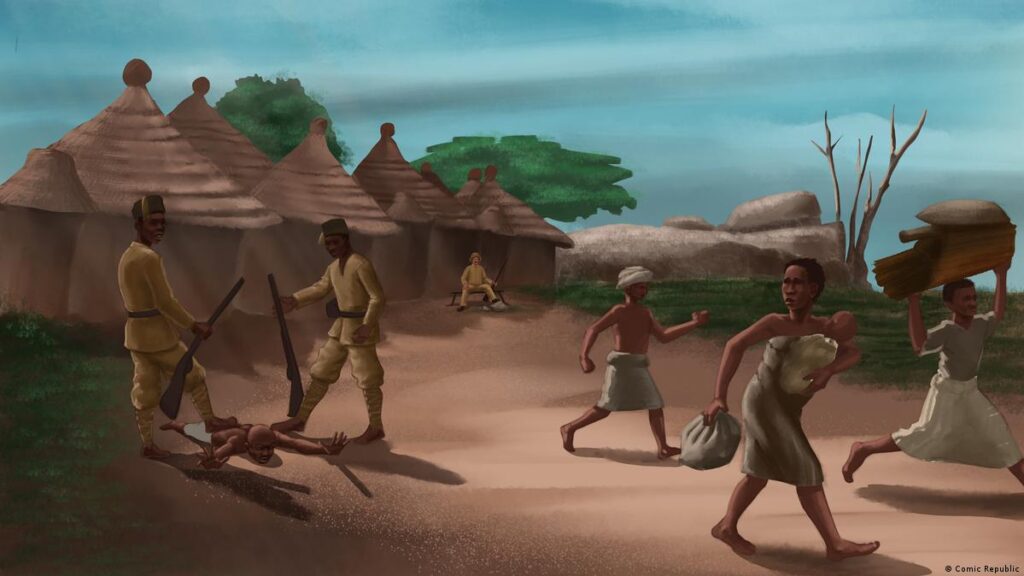
King’s African Rifles (KAR) as an instrument of oppression
Racial discrimination in the colonial legal system
2. Background to African National Military
The Colonial Military Inheritance:
KAR used to suppress resistance (Maji Maji, Mau Mau), enforce taxes, and fight in World Wars
Commanded by European officers; Africans served only as rank-and-file
The Need for New National Military Institutions:
To safeguard national sovereignty
To maintain internal security
To prevent military coups
To Africanize the military
To align the military with national ideology
To revive African culture
3. The Tanzania People’s Defence Forces (TPDF)
The Mutiny of 1964: A Turning Point
20th January 1964: KAR mutinied at Colito Barracks
Demands: Higher pay, replacement of British officers, faster Africanisation
President Nyerere requested British assistance
Significance: Led to disbandment of KAR and establishment of TPDF
Establishment of the TPDF:
1st September 1964: TPDF formally established by Act of Parliament
A People’s Army loyal to the nation and TANU
Integration with the party (Ujamaa and Self-Reliance)
President as Commander-in-Chief
Specialized sections: Infantry, Air Force, Navy
Functions of the TPDF:
Defence of national sovereignty
Maintenance of internal security
Assistance during national emergencies
Support for liberation movements (FRELIMO, ZANU, ZAPU, ANC, PAC, SWAPO)
International peacekeeping (UN, AU, Commonwealth)
The Kagera War (1978–1979) against Idi Amin
4. The Police Force
Definition: Civilian law enforcement agency
The Colonial Police: Used to enforce colonial laws, collect taxes, suppress resistance
Post-Independence Transformation: Africanisation and reforms
Functions of the Police Force:
Maintaining law and order
Preventing and detecting crime
Protecting life and property
Traffic control
International cooperation (INTERPOL)
5. The Prisons
Definition: Facilities where convicted individuals are incarcerated and rehabilitated
Post-Independence Changes:
Africanisation
Nation-building activities
Rehabilitation focus
Functions of Prisons:
Incarceration
Rehabilitation
Deterrence
6. National Legal Institutions
The Colonial Legal System:
Racial discrimination (separate laws for Europeans, Asians, Africans)
Dual legal system
No equality before the law
Post-Independence Transformation of Legal Institutions:
Objectives: Equality before the law, abolish discriminatory laws, independent judiciary, Africanize the judiciary, integrate customary law
Structure of Legal Institutions in Tanzania:
Special Constitutional Court
Court of Appeal
High Court
Resident Magistrate’s Court
District Court
Primary Court
Functions of Legal Institutions:
Administration of justice
Protection of rights
Interpretation of laws
Conflict resolution
Upholding the rule of law
Strengths of National Legal Institutions:
Equality before the law
Independence of the judiciary
Integration of customary law
Protection of constitutional rights
Weaknesses of National Legal Institutions:
Interference from other state organs
Inadequate funding
Shortage of personnel
Limited public legal awareness
Backlog of cases
7. Summary Points
10 concise revision points for quick recall
8. Assessment Questions
A. Short Answer Questions (5)
B. Structured Questions (5–7 marks each)
C. Essay Questions (10–12 marks each)
🎯 WHY THIS RESOURCE IS PERFECT FOR YOU
✅ Well-Organised – Content is broken down into clear, digestible sections
✅ Exam-Focused – Includes short answer, structured, and essay questions
✅ Comprehensive – Covers military, police, prisons, and legal institutions
✅ Student-Friendly – Simple language with detailed explanations
✅ Revision-Ready – Summary points and practice questions for self-testing
✅ Teacher-Approved – Ideal for classroom use, homework, and exam preparation
📚 WHO IS THIS FOR?
Form 5 Students studying History
Teachers preparing lesson notes and assessments
Parents supporting their children’s learning
Anyone interested in African history and post-independence institutions
🛒 GET YOUR COPY TODAY!
This is a must-have resource for anyone serious about mastering Form 5 History. Whether you’re revising for exams or teaching in class, these notes will save you time and help you achieve excellent results.
MITIHANI POPOTE — Quality educational resources wherever you are.




Reviews
There are no reviews yet.