
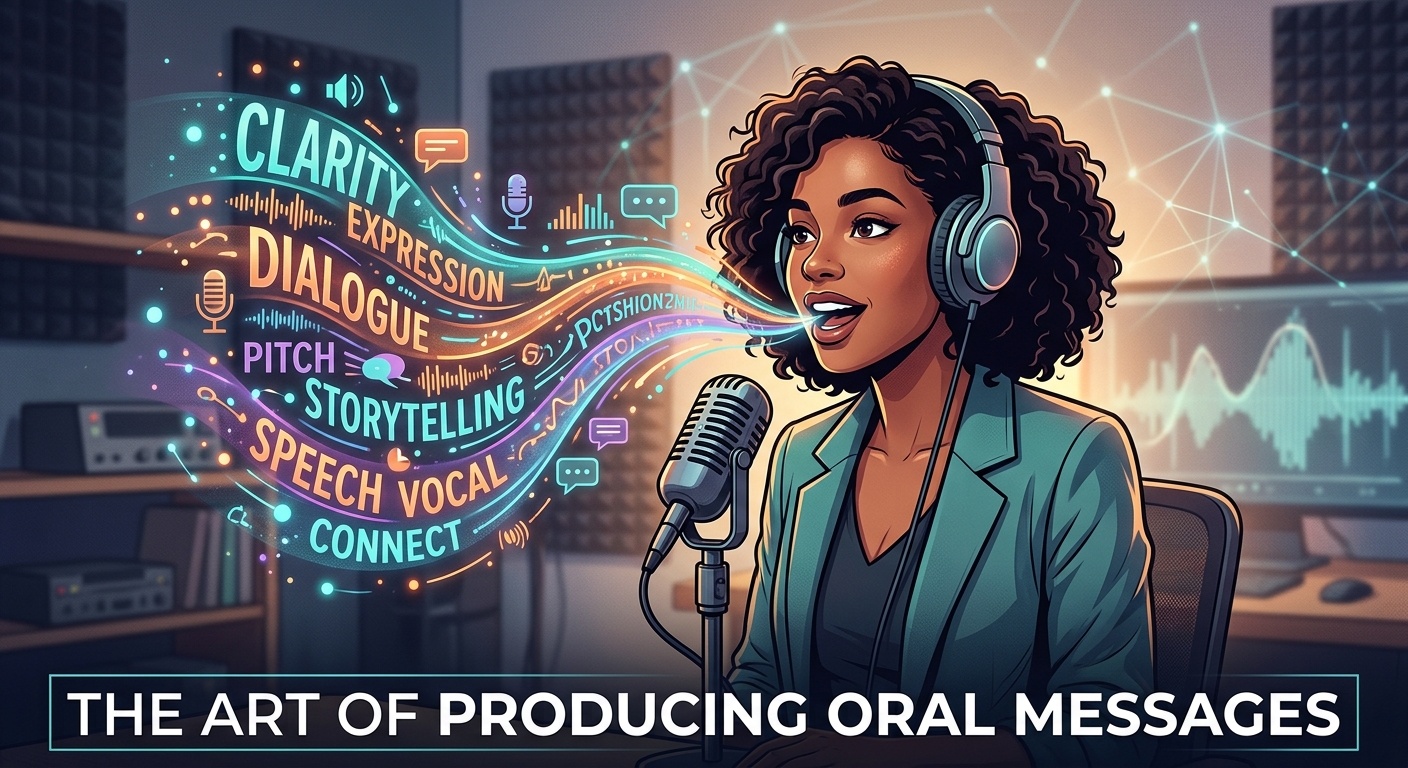
Description
PRODUCING ORAL MESSAGES — FORM 2 STUDY NOTES (PDF)
Master Oral Communication with This Complete, Exam-Ready Study Guide!
Are you a Form 2 student, teacher, or exam candidate looking for a clear, detailed, and well-organized resource on Producing Oral Messages? This professionally compiled PDF study guide, “002 PRODUCING ORAL MESSAGES F2,” is exactly what you need to understand every concept — from intonation patterns and their functions to cohesive devices and how to use them effectively in oral presentations.
📘 WHAT’S INSIDE?
This comprehensive resource covers the entire Form 2 Producing Oral Messages syllabus, including:
✅ Introduction to Producing Oral Messages
Two main competencies:
A. Constructing sentences with proper intonation
B. Using cohesive devices in oral presentations
✅ Intonation in Oral Communication
Definition of Intonation: The variation of voice pitch when speaking — how the voice rises and falls during speech
Important Note: Ignoring intonation cues can lead to miscommunication or misunderstanding
Types of Intonation: Four main patterns
Falling Intonation
Rising Intonation
Fall-Rise Intonation
Rise-Fall Intonation
✅ Falling Intonation
Description: Voice starts high and gradually falls towards the end (most common pattern)
Applications:
Statements that provide facts or explanations — conveys finality
WH- questions (who, what, where, when, why, how)
Commands — expresses authority and finality
Examples: “My favourite subject is Mathematics,” “Where are you going?”, “Close the door, please.”
✅ Rising Intonation
Description: Voice rises at the end of a sentence
Applications:
Yes/No questions — expresses uncertainty
Seeking confirmation
Suggesting that a sentence is incomplete
Expressing doubt
Examples: “Are you coming with us?”, “Did you finish the report?”, “Can you help me?”
✅ Fall-Rise Intonation
Description: Voice falls and then rises slightly
Applications:
Expressing uncertainty
Showing politeness
Indicating that the speaker has more to say
Example: “I thought he was coming, but…”
✅ Rise-Fall Intonation
Description: Voice rises and then falls sharply
Applications:
Expressing strong emotions such as surprise, disbelief, or sarcasm
Used in exclamatory sentences
Examples: “Really! You are not coming to the class!”, “What a beautiful day!”, “Wow, that’s incredible!”
Important Note: Intonation patterns can vary based on the speaker’s accent, personality, and context
✅ Additional Examples for Practice
Eight sentences demonstrating different intonation patterns
✅ Identifying Intonation Patterns
Practice Exercise: Eight sentences to determine intonation type
Intonation in Context: “HIV and AIDS Pandemic in Mwendakulima Village”
Key Themes: HIV/AIDS as a serious problem, poor treatment of people living with HIV, stigma, government campaigns, care and medication, community education, stigma affecting other groups
Types of Intonation Found: Rising, Falling, Fall-Rise, Rise-Fall
✅ The Relationship Between Sentence Types and Intonation
Questions and Rising Intonation:
Applies to: Yes/No questions, tag questions, questions seeking confirmation or clarification
Does NOT apply to: WH-questions (which use falling intonation), rhetorical questions
Statements and Falling Intonation:
Applies to: Declarative statements, commands and instructions, WH-questions
Does NOT apply to: Yes/No questions (which use rising intonation), questions expressing uncertainty
Special Intonation Patterns:
Rise-Fall: Exclamatory sentences, expressions of strong emotion
Fall-Rise: Sentences expressing uncertainty, polite requests, incomplete thoughts
✅ Cohesive Devices in Oral Presentations
Definition: Specific words and phrases used to link events, ideas, and sentences together in speech or writing (also called linking words); quality known as cohesion
Types of Cohesive Devices with Examples:
Addition (also, and, too, furthermore) — Used to add information or ideas
Contrast (however, although/though, but, yet) — Used to show difference or opposition
Cause-and-Effect (because, so, therefore, consequently, thus) — Used to show relationship between cause and result
Sequencing (first, then, lastly, finally) — Used to show order or sequence
Clarifying (for example, for instance, this means) — Used to give examples or clarify points
Additional Cohesive Devices: Instead, Meanwhile, In contrast, Next, Therefore/Consequently, Finally, Furthermore/Moreover
✅ Example Sentences with Cohesive Devices
Ten sentences demonstrating cohesive devices in context
✅ Identifying Cohesive Devices in Texts
Example Text: “The Beauty of Tanzania”
Cohesive Devices Identified: Besides (Addition), Nonetheless (Contrast), Because of (Cause), Consequently (Effect), At first (Sequencing), However (Contrast), More specifically (Clarifying), That is to say (Clarifying), Hence (Cause-and-Effect), As a consequence (Cause-and-Effect), Moreover (Addition), Ultimately (Sequencing)
Example Dialogue: “Serengeti National Park”
Cohesive Devices Used: As we drive (Sequencing), Because (Cause), After all (Clarifying), Furthermore (Addition), Well (Clarifying)
✅ Application Exercises
Exercise 2.1: Identifying Intonation Types — Twelve sentences to identify type and intonation pattern
Exercise 2.2: Filling in Cohesive Devices — Eight sentences with blanks to fill
✅ Functions of Different Intonation Patterns
Falling Intonation: Shows completion and finality, indicates certainty, used in WH-questions, used in commands and instructions
Rising Intonation: Shows uncertainty or doubt, asks yes/no questions, seeks confirmation, indicates incomplete thought
Fall-Rise Intonation: Expresses politeness, shows uncertainty, indicates the speaker has more to say, used in tag questions
Rise-Fall Intonation: Expresses strong emotions, used in exclamations, emphasises specific words or phrases
✅ Functions of Cohesive Devices
Addition Devices: Add information or ideas (also, and, too, furthermore, moreover, in addition, besides)
Contrast Devices: Show opposition or difference (although/though, but, yet, however, in contrast, on the other hand, nonetheless, nevertheless, whereas)
Cause-and-Effect Devices: Show relationship between cause and result (because, so, therefore, consequently, thus, hence, as a result, as a consequence)
Sequencing Devices: Show order or sequence (first, second, third, next, then, after that, later, finally, ultimately, at first, then, lastly)
Clarifying Devices: Give examples or clarify points (for example, for instance, such as, that is to say, more specifically, this means)
✅ Important Notes for Oral Presentations
Using Intonation Effectively:
Vary your pitch to keep the audience engaged
Match intonation to the type of sentence
Use rise-fall intonation for emphasis and emotion
Use falling intonation for statements to show confidence
Use rising intonation for yes/no questions
Using Cohesive Devices Effectively:
Use appropriate cohesive devices to connect ideas
Vary your cohesive devices to avoid repetition
Ensure the cohesive device matches the relationship between ideas
Overusing cohesive devices can make speech sound mechanical
Underusing them can make speech sound disconnected
Common Errors to Avoid When Speaking:
Speaking in a monotone
Using inappropriate intonation for the sentence type
Failing to connect ideas with cohesive devices
Using the wrong cohesive device for the relationship
Overusing the same cohesive device repeatedly
✅ Summary of Chapter Objectives
Construct sentences with proper intonation for different sentence types
Distinguish between falling, rising, fall-rise, and rise-fall intonation
Use appropriate intonation in statements, questions, commands, and exclamations
Identify and use cohesive devices in oral presentations
Apply addition, contrast, cause-and-effect, sequencing, and clarifying devices
Create a well-structured oral presentation with smooth flow of ideas
Recognise how intonation and cohesive devices enhance communication effectiveness
🎯 WHY CHOOSE THIS STUDY GUIDE?
✔ Exam-Focused — Aligned with the Form 2 English syllabus
✔ Comprehensive — Covers every subtopic in detail
✔ Easy to Understand — Clear explanations, examples, and tables
✔ Practical — Includes practice exercises, example texts, and application activities
✔ Time-Saving — All notes in one organized PDF
✔ Perfect for Revision — Intonation types, functions, cohesive devices, and common errors clearly summarized
👥 WHO IS THIS FOR?
Form 2 students studying English Language
Teachers preparing lesson notes, schemes of work, and examinations
Candidates revising for national exams (FTNA, CSEE)
Anyone interested in improving their oral communication skills
📥 GET YOUR COPY TODAY!
Don’t waste time searching through multiple textbooks. This all-in-one study guide gives you everything you need to master Producing Oral Messages — clearly, concisely, and completely.
Download now and start scoring higher in English!
MITIHANI POPOTE — Quality educational resources wherever you are.





Reviews
There are no reviews yet.