
Description
📘 Topic 1: Origin of Human Beings – Form 1 Study Guide
Uncover the Theories, Evidence, and Technological Journey of Humankind
🧬 What Is This Topic About?
This topic explores the origins of human beings through two major theories — the Theory of Creation and the Theory of Evolution. It examines the evidence for human evolution, the major groups of human ancestors, and the development of human technology from the Stone Age to the Iron Age, with a special focus on Tanzania’s role as the “cradle of mankind.”
✅ What You’ll Learn Inside
🔹 Theories of the Origin of Human Beings
Theory of Creation
Belief that a Supreme Being (God) created the world and all things, including human beings
Upheld in Judaism, Christianity, Islam, and African indigenous religions
Biblical reference: Genesis 1:26
Quranic reference: Surah As-Sajdah 32:7
African societies also believed in a Supreme Being who created everything
Theory of Evolution
Evolution: The process of change in heritable features of a species over generations through natural selection
Key proponent: Charles Darwin in “On the Origin of Species” (1859)
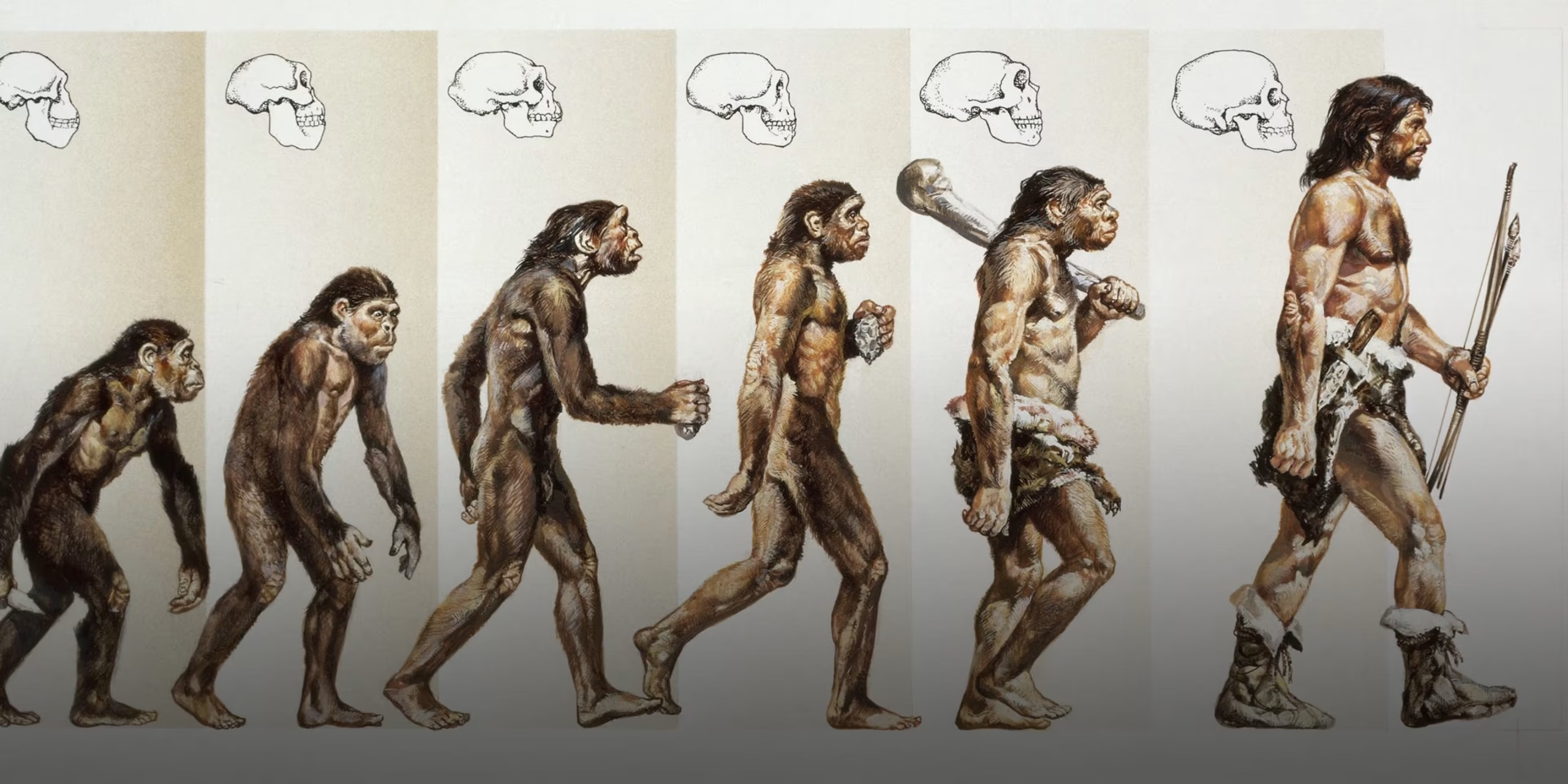
Humans and non-human primates shared a common ancestor more than 13 million years ago
Natural Selection – Only the strongest or fittest survive; species adapt to their environment
🔹 Evidence for Human Evolution
Comparative Studies of Modern Animals – Anatomical similarity between humans and monkeys
Fossil Evidence – Animal bones showing gradual change in shape and technological development
Tanzania: Olduvai Gorge (Arusha) – the most famous site in Africa for human evolution; earned Tanzania the title “cradle” or original home of human beings
Other fossil sites in Tanzania: Laetoli, Lake Natron, Lake Nduitu, Lake Eyasi
Other sites in East and Southern Africa: Koobi Fora (Kenya), Omo and Hadar (Ethiopia), Sterkfontein (South Africa)
🔹 Major Groups of Human Ancestors
Ardipithecus (5.8 to 4.4 million years ago)
Ape-like features, strong teeth with small enamel, strong arms
Climbed trees and walked on two legs (bipedalism)
Discovered at Omo archaeological site, Ethiopia
Australopithecus (4.2 to 2.0 million years ago)
Meaning: “Southern ape”
First evidence of human ancestors found in southern Africa
Key discoveries:
Australopithecus africanus – Discovered by Raymond Dart in Taung, South Africa
Australopithecus afarensis – Discovered in Laetoli (Tanzania) and Afar (Ethiopia)
Australopithecus boisei (Zinjanthropus) – Discovered in Olduvai Gorge (Tanzania) by Dr. Mary and Louis Leakey in 1959
Homo (About 2.5 million years ago to present)
Smaller body size, bigger brain, diet included meat
Started making and using tools
Species:
Homo habilis (“Handyman”) – 2.5 to 1.6 million years ago; first to make and use tools; found in Olduvai Gorge, Koobi Fora, Sterkfontein
Homo erectus (“Upright Man”) – 1.9 million to 300,000 years ago; made advanced hand axes; first to use fire; first to migrate from Africa to Asia and Europe; found in Olduvai Gorge, Koobi Fora, Zhoukoudian (China), Dmanisi (Georgia)
Homo sapiens (“Wise Man”) – 400,000 to 70,000 years ago; larger brain than Homo erectus; found in Laetoli, Lake Eyasi, Lake Nduitu
Homo sapiens sapiens (“Doubly Wise Man”) – 150,000 to 20,000 years ago; immediate ancestors of modern humans; found in Nasera and Mumba rock-shelters (Arusha)
🔹 Human Technology
Stone Age – Period when stone was the primary material for tools and weapons
1. Early Stone Age (Old Stone Age) – 3.0 million to 400,000 years ago
Way of life: Hunting wild animals, gathering fruits, roots, eggs
Oldowan Tools – Simple, crude tools made by Homo habilis (flakes, choppers, cores); named after Olduvai Gorge
Acheulian Tools – More advanced tools made by Homo erectus (hand axes, cleavers, picks); found in Isimila, Olduvai Gorge, Lake Natron, Laetoli
Physical changes: Australopithecus, Homo habilis, Homo erectus
2. Middle Stone Age – 400,000 to 50,000 years ago
Key innovation: Discovery and use of fire
Advantages of fire: Roasting food, burning bushes, living in cold regions, making glue
Tool types: Smaller, sharper tools (points, scrapers, knives)
Physical changes: Homo sapiens with larger brains (900cc–1,300cc)
3. Late Stone Age (New Stone Age) – 50,000 to 1,500 years ago
Key innovations: Fishing, farming, rock paintings
Way of life: Hunting with bows and arrows, gathering, fishing; settled communities
Tool types: Stone axes, barbed arrows, spears made by Homo sapiens sapiens
Discovery locations: Mumba and Nasera rock shelters (Tanzania), Gambles Cave (Kenya), Magosi (Uganda)
Physical changes: Walked upright, less body hair, smaller teeth, large brain capacity (1300–1450cc)
Iron Age – Period when human beings used iron to make tools and weapons
Time period in Africa: 500 BCE to 600 CE
Spread by Bantu-speaking people
Iron Smelting – Changing iron ore into pure iron through heating in a furnace
Iron Forging – Shaping smelted iron into usable objects by hammering
Advantages of Iron Tools:
Expansion of agriculture
Settled life
Population increase
Emergence of chiefdoms and kingdoms (e.g., Buganda, Karague)
Improved hunting and self-defence
Emergence of specialisations (basketry, pottery, trade)
Growth of trade
🎯 Key Features
10 Clear Summary Points for quick revision
5 Short-Answer Questions to test understanding
5 Structured Questions for deeper analysis
5 Essay Questions for critical thinking and exam preparation
Real Tanzanian Examples throughout — Olduvai Gorge, Laetoli, Zinjanthropus boisei, Isimila, Mumba and Nasera rock shelters
Comparison of Theories — Creation vs. Evolution
Detailed Timeline of human ancestors and technological development
Focus on Tanzania as the “cradle of mankind”
👨🎓 Who Is This For?
Form 1 Students beginning their secondary history course
Teachers looking for a well-structured, ready-to-use teaching resource
Parents supporting their children’s learning at home
Anyone preparing for national examinations (NECTA)
💡 Why Choose This Guide?
✔ Aligned with the Tanzanian secondary school syllabus
✔ Written in clear, simple English for easy comprehension
✔ Packed with local examples students can relate to
✔ Includes practice questions with varying difficulty levels
✔ Perfect for classroom teaching, self-study, and revision
✔ Covers cross-topic connections (links to Geography, Biology, and History)
📥 Get Your Copy Today!
Whether you’re a student aiming for top marks, a teacher preparing engaging lessons, or a parent investing in your child’s academic success — Topic 1: Origin of Human Beings is your essential companion for understanding the story of humankind.
Start your journey into human origins today!
MITIHANI POPOTE — Quality educational resources wherever you are.




Reviews
There are no reviews yet.