
Description
📘 Topic 5: Handcraft and Mining Industries in Pre-Colonial Africa – Form 1 Study Guide
Discover the Skills, Crafts, and Mineral Wealth That Built Pre-Colonial African Economies
⚒️ What Is This Topic About?
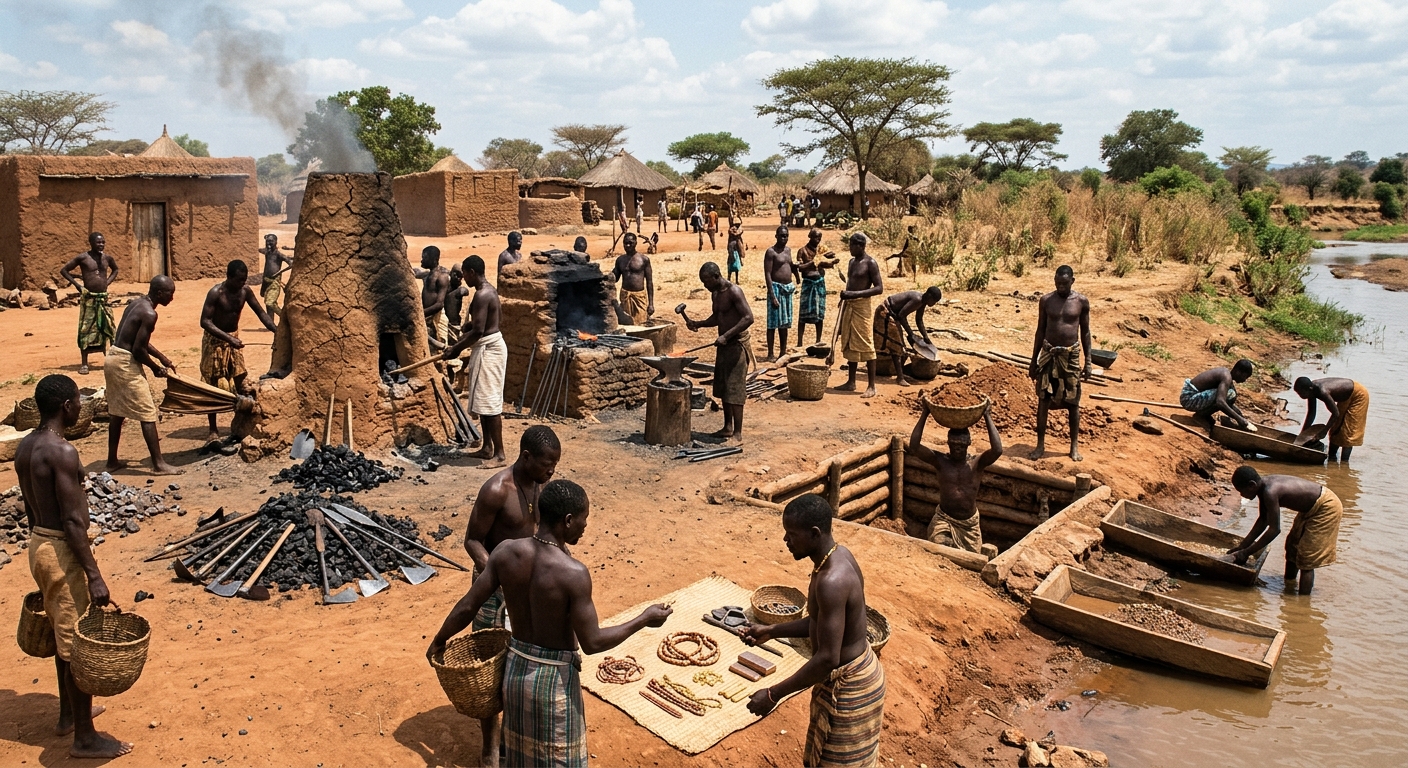
This topic explores the handcraft and mining industries that existed in pre-colonial Africa. It covers the definition of an industry, the major handcraft industries (cloth making, pottery, basketry, and carpentry), and the major mining industries (ironworking, salt making, gold mining, and copper mining). It also explains how these industries led to specialisation, trade, and the rise of urban centres.
✅ What You’ll Learn Inside
🔹 Introduction to Handcraft and Mining Industries
Definition of an Industry – A place where transformation of raw materials into finished goods is carried out
Definition of Handcraft – The art of using skills and hands to design and fashion things
Importance – Emerged as people specialised in activities apart from agriculture; enabled production of tools and objects for daily life and trade
🔹 Handcraft Industries in Pre-Colonial Africa
A. Cloth Making
Definition – The art of making clothes from local cotton species, barks of trees, and animal skins
Methods:
Bark Cloth – Pounding tree bark until soft and pliable; decorated with dyes
Tanzania: Haya (Bukoba), Nyakyusa (Mbeya), Ganda (Uganda)
Animal Skins – From sheep, goats, and camels
Common in Madagascar, Northern Africa, Sudan, Sahel belt of West Africa, among the Yoruba, Malawi, and Mozambique
Cotton Cloth – Cotton grown and woven into cloth
Tanzania: Ufipa, Unyamwezi (Tabora), Unyiha (Mbeya)
Uses of Clothes:
Covering the body
Keeping warm
Decoration and adornment
Special occasions (religious, traditional, funeral)
Colours carried symbolic meaning (e.g., rainmakers wore black)
Important commodities that stimulated trade
B. Pottery
Definition – The art of making pots and other items from clayey soils
Process – Collect clay, mould into desired shapes, bake in fire or kiln
Areas Practised:
Tanzania: Pare (North-Eastern Tanzania), Kerewe (Ukerewe Island), Kisi (shores of Lake Nyasa)
Elsewhere: Nok area in Northern Nigeria (terracotta pottery)
Uses:
Domestic: Cooking, storing water, beer, milk, grains
Trade: Important commodities in local and regional trade
Example: Pare potters traded with Chagga, Taveta, and Maasai; Kisi potters traded with Nyakyusa, Ndali, Kinga, Pangwa, and Ngoni
C. Basketry
Definition – The art of weaving palm leaves and special reeds to make items like fish traps, mats, hats, baskets, and ropes
Materials Used – Palm leaves, reeds, bamboos, and various types of grass
Areas Practised:
Tanzania: Nyamwezi, Gogo, Zaramo, Yao, and Ganda
Elsewhere: Chokwe, Lozi, and Tonga (Zambia); Buga (Guinea and Liberia); Sara (Chad); Zulu (South Africa); Barotse and Twana (Botswana); Bamileke (Cameroon)
Uses:
Agriculture: Collecting and carrying products; storing grain and seeds
Fishing: Making fish traps
Domestic: Mats for sitting, sleeping, drying foodstuff
Funeral: Wrapping dead bodies for burial
D. Carpentry
Definition – The art of working on wood logs and poles to make wooden products
Areas Practised – Common in woodland environments
Products Made – Stools, mortars, pestles, doors, canoes, beehives, wooden basins
Example in Tanzania – The Makonde of Southern Tanzania and Northern Mozambique carved wood to make figurines, masks, earrings, and bracelets
Uses:
Canoes: Transporting people and commodities; fishing
Mortars and Pestles: Pounding grains and crushing herbs
Stools and Doors: Furniture and shelter
🔹 Mining Industry in Pre-Colonial Africa
Definition – The extraction of minerals from the ground
Minerals Extracted – Iron, salt, gold, copper, silver, and tin
A. Ironworking
Definition – The process of extracting iron from iron ore and forging it into tools and weapons
Development in East Africa – Started around 500 BCE; widely spread by 1700 CE
Stages of Iron Production:
Mining – Iron ore mined from the ground
Smelting – Ore smelted in a furnace; air pumped using bellows through a tuyere
Cooling – Pure iron left to cool and solidify
Forging – Solidified iron heated until red hot and hammered into tools or weapons (ironsmiths)
Examples of Ironworking Societies:
Tanzania: Meru, Kerewe, Haya, Fipa, Zinza; Pare (royal Shana clan); Zinza of Geita
East Africa: Baganda (Uganda), Teso (Uganda), Venda (South Africa)
Central Africa: Mashona (Zimbabwe), Mang’anja (Malawi), Kalambo Falls (Zambia)
West Africa: Futa Djalon plateau (Guinea)
North-Eastern Africa: Nubia, Meroe (Sudan), Axum (Ethiopia)
Advantages of Iron Tools:
Expansion of agriculture
Simplified mining
Increased production
Consolidated settled life
Rise of states (e.g., Fipaland, Buganda, Karague)
Changes in warfare
B. Salt Making
Definition – The extraction and processing of salt
Methods of Obtaining Salt:
Extraction from Salty Reeds – Burnt reeds, ash dissolved in water, filtered, boiled
Example: Mang’anja along Lake Nyasa; around Lakes Victoria and Albert
Leaching – Water drained through rocky soils with high salt content, sieved and boiled
Tanzania: Uvinza and Ivuna
Salt Mining from Rocks – Directly mined salty rocks
Example: Lake Bangwelo and Luapula rivers (Central Africa); Bilma, Taghaza, Taoudeni (West Africa)
Evaporation – Salty ocean water trapped in pans and dried under the sun
Tanzania: Coastline of Tanga, Bagamoyo, Dar es Salaam, Lindi
Uses of Salt:
Food ingredient
Food preservative
Medium of exchange (e.g., Uvinza salt in the Great Lakes region)
Medicine (wounds, antacid)
Mummification (ancient Egyptians)
C. Gold Mining and Processing
Definition – The extraction and processing of gold
Areas of Gold Mining:
Southern Africa: Sabi and Zambezi Rivers
West Africa: Bambuk, Bure, Lobi, forest area of Asante
Methods of Gold Extraction:
Panning Method – Collecting alluvial gold along streams using pans
Example: Tributaries of Sabi and Zambezi Rivers
Shaft Method – Digging rocks containing gold from underground veins, burning in furnaces
Example: Mashonaland (Zimbabwe), Asante (Ghana)
Uses of Gold:
Commodity
Currency
Symbols of power (e.g., Asante King’s stool)
Jewelry and ornaments
Utensils
Symbol of wealth
D. Copper Mining and Processing
Definition – The extraction and processing of copper through smelting of copper ores
Areas of Copper Mining:
Central Africa: Kafue (Zambia), Gwa River (Zimbabwe), Katanga (Congo)
North Africa: Sinai Peninsula (Egypt)
West Africa: Igbo and Yoruba (Nigeria)
Uses of Copper:
Items: Ornaments, bowls, copper wire, daggers, helmets
Medium of exchange (especially in West Africa)
Fishing: Fish hooks (mainly in Egypt)
🎯 Key Features
10 Clear Summary Points for quick revision
5 Short-Answer Questions to test understanding
5 Structured Questions for deeper analysis
5 Essay Questions for critical thinking and exam preparation
Real Tanzanian Examples throughout — Haya bark cloth, Pare pottery, Makonde carpentry, Uvinza salt, Fipa ironworking, Zinza of Geita
Step-by-Step Explanation of iron production stages
Comparison Tables for handcraft and mining industries
Focus on the Impact of Industries on trade, specialisation, and urban development
👨🎓 Who Is This For?
Form 1 Students beginning their secondary history course
Teachers looking for a well-structured, ready-to-use teaching resource
Parents supporting their children’s learning at home
Anyone preparing for national examinations (NECTA)
💡 Why Choose This Guide?
✔ Aligned with the Tanzanian secondary school syllabus
✔ Written in clear, simple English for easy comprehension
✔ Packed with local examples students can relate to
✔ Includes practice questions with varying difficulty levels
✔ Perfect for classroom teaching, self-study, and revision
✔ Covers cross-topic connections (links to Topics 1, 3, and 4)
📥 Get Your Copy Today!
Whether you’re a student aiming for top marks, a teacher preparing engaging lessons, or a parent investing in your child’s academic success — Topic 5: Handcraft and Mining Industries in Pre-Colonial Africa is your essential companion for understanding the skills, crafts, and mineral wealth that built pre-colonial African economies.
Start exploring the industries of pre-colonial Africa today!
MITIHANI POPOTE — Quality educational resources wherever you are.




Reviews
There are no reviews yet.