
Description
Master Soil Chemistry – Your Complete F4 Guide to Understanding the Science Beneath Our Feet!
Do you struggle to understand how soil is formed, why pH matters, or how nutrients cycle through the soil? Want to learn how to answer NECTA exam questions on soil chemistry with confidence? This all-in-one study guide is exactly what you need! Specially designed for Form Four (F4) students, it provides simple, direct, and exam-focused notes to help you excel in your NECTA CSEE Examinations.
What’s Inside?
Introduction to Soil Chemistry: Understand what soil chemistry is and why it is essential for agriculture, land management, and environmental protection.
Section 1: Soil Formation (Pedogenesis):
The concept of pedogenesis and the three types of weathering: Physical (thermal expansion, frost action, abrasion), Chemical (hydration, hydrolysis, carbonation, oxidation), and Biological (plant roots, organic acids).
Factors influencing soil formation using Hans Jenny’s equation: Parent Material, Climate, Organisms, Relief/Topography, and Time.
The soil profile and horizons (O, A, E, B, C, R) with a detailed diagram and descriptions of each layer.
Section 2: Plant Nutrients in the Soil:
Arnon and Stout’s Criteria of Essentiality (1939) and the 17 essential elements for higher plants.
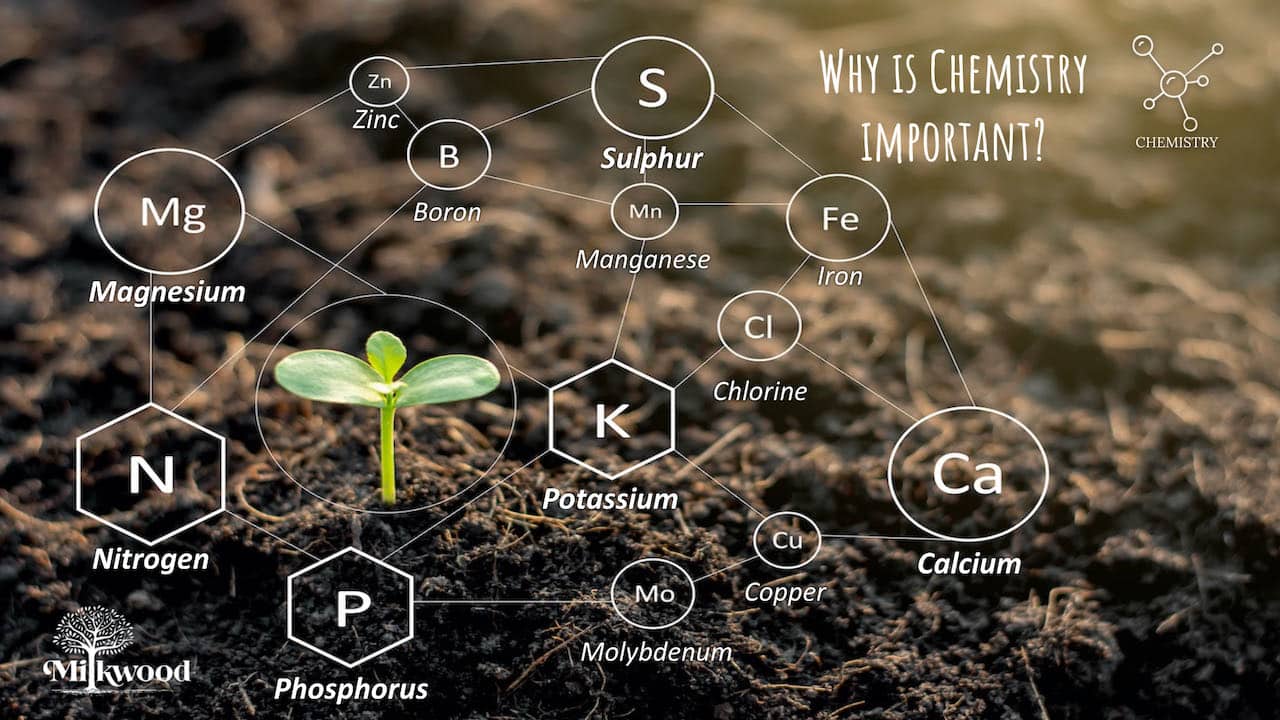
Classification of nutrients: Macro-nutrients (Primary: N, P, K; Secondary: Ca, Mg, S) vs. Micro-nutrients (Fe, Zn, Cu, Mn, B, Mo, Cl, Ni).
Detailed functions, chemical forms absorbed, and deficiency symptoms of primary macro-nutrients (Nitrogen, Phosphorus, Potassium).
The Nitrogen Cycle: Nitrogen Fixation (biological, industrial, atmospheric), Nitrification (Nitrosomonas and Nitrobacter), Assimilation, Ammonification, and Denitrification—with full chemical equations.
Section 3: Soil Reaction (pH):
Definition and importance of soil pH, the pH scale (acidic, neutral, alkaline), and the optimum range for most crops (6.0–7.5).
Causes of soil acidity (leaching, acidifying fertilizers, organic matter decomposition, aluminum hydrolysis) and alkalinity (arid climates, sodium carbonate accumulation).
Soil pH and nutrient availability: Strongly acidic soils (Al and Mn toxicity, P fixation), optimum range (maximum availability), and alkaline soils (Ca phosphate precipitation, micronutrient deficiencies).
Soil Buffering Capacity: How clay and organic matter resist pH changes, and why sandy soils have poor buffering.
Soil pH Modification: Liming acidic soils with CaCO₃ or dolomitic limestone, and acidifying alkaline soils with elemental sulfur or aluminum sulfate—with full chemical equations.
Section 4: Manures and Fertilisers:
Organic manures (Farmyard Manure, Compost, Green Manure) vs. Chemical fertilizers (Single, Compound).
N-P-K Ratios and Analysis: How to interpret fertilizer labels (e.g., 10-10-10, 20-5-5) and calculate nutrient content.
Advantages and Disadvantages: Complete comparison table covering nutrient concentration, release rate, soil structure, microbial activity, and transportation.
Environmental Impact: Eutrophication—a step-by-step breakdown from fertilizer runoff to aquatic dead zones.
Section 5: Soil Fertility and Soil Productivity:
Clear distinction between soil fertility (nutrient status) and soil productivity (actual crop yield), with the key concept: “All productive soils are fertile, but NOT all fertile soils are productive.”
Factors affecting soil fertility (nutrient depletion, leaching, erosion, pH extremes) and productivity (climate, water, physical properties, pests, management practices).
Sustainable methods of soil management: Crop Rotation, Integrated Soil Fertility Management (ISFM), and Conservation Tillage & Cover Cropping.
Chapter Summary: A concise recap of all key concepts for quick revision.
Revision Exercise 3 with Full Answer Key:
Part A: 5 Multiple Choice Questions with answers.
Part B: 5 Short Answer Questions with detailed solutions.
Part C: 3 Long Answer & Essay Questions with model answers.
All answers include full chemical equations, step-by-step explanations, and exam tips.
Why Choose This Guide?
✅ Exam-Focused: Simple, direct notes designed specifically for NECTA CSEE success.
✅ Comprehensive: Covers all key areas of the F4 Chemistry syllabus on Soil Chemistry.
✅ Easy to Follow: Clear explanations, chemical equations, and diagrams make complex concepts simple.
✅ Exam-Style Questions: Includes multiple choice, short answer, and essay questions with full solutions to boost your confidence.
✅ Practical Applications: Uses real-world agricultural examples to connect learning to life.
Whether you are a student preparing for national exams, a teacher looking for a ready-made teaching resource, or a parent supporting your child’s education, this guide is your ultimate companion for Chemistry success.
Don’t just learn Chemistry—master it. Grab your copy today and start understanding soil chemistry with clarity and confidence!
MITIHANI POPOTE-Quality resources





Reviews
There are no reviews yet.