
Description
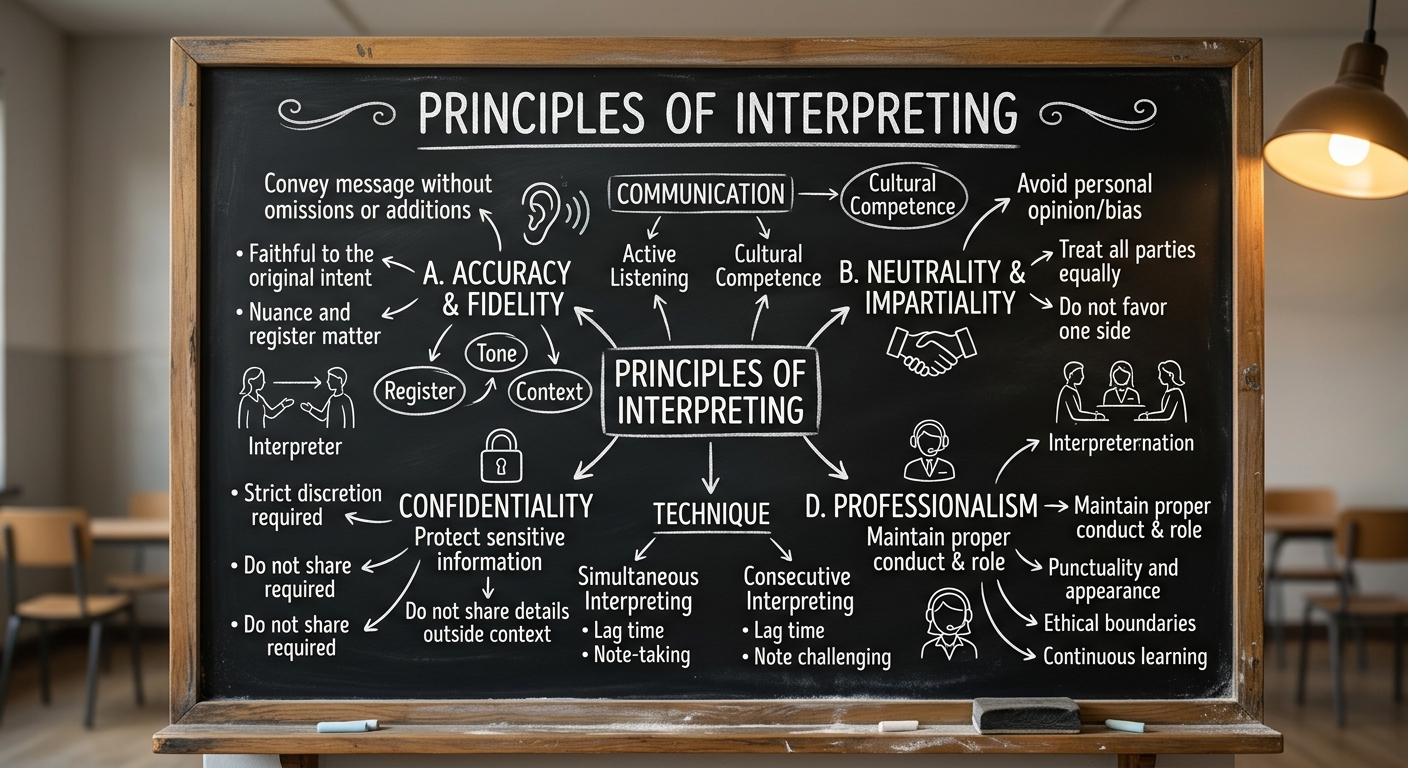
PRINCIPLES OF INTERPRETING — Complete Study Guide
Advanced Level English — Form Five
A comprehensive, exam-ready resource covering everything from intralingual, interlingual, and sign language interpreting to the five principles and professional ethics of interpretation — all in one clearly organized document.
📘 What’s Inside
1. Introduction to Principles of Interpreting
Clear definitions of all key terms: interpreting, interpretation, intralingual interpreting, interlingual interpreting, sign language interpreting, and simultaneous interpreting
Five key reasons why interpreting matters: cross-cultural communication, professional development, academic success, social inclusion, and global understanding
2. Three Types of Interpreting
Comparison diagram distinguishing intralingual, interlingual, and sign language interpreting
Clear distinction between translation (written) and interpretation (spoken)
Intralingual interpreting — key features and three full examples:
Human rights text simplified into plain language
Medical example (ante cibum → before meals)
Legal example (plaintiff/defendant → plain terms)
Tanzanian court examples
Interlingual interpreting — key features and six types: simultaneous, consecutive, whisper, remote simultaneous, travel/escort, and scheduled telephone interpreting
Sign language interpreting — key features, contexts, and the Tanzania Sign Language (TSL) alphabet with hand shapes for A–Z
3. Practising Intralingual Interpreting
Four skills needed: comprehension, paraphrasing, audience awareness, and summarizing
Two full worked examples: legal text and medical text, each with original and plain-language interpretation
4. Practising Interlingual Interpreting
Four skills needed: bilingual competence, listening skills, processing skills, and production skills
Four full worked examples translating between English and Kiswahili (both directions)
5. Practising Sign Language Interpretation
Four skills needed: sign language proficiency, visual processing, cultural awareness, and interpretation skills
Four practice activities: alphabet practice, name practice, basic expressions, and self-introduction
6. Principles of Interpreting
All five principles fully explained with examples and applications:
Equivalence — including the “Lost in Interpreting” case study showing what happens when equivalence fails
Accuracy — faithful reproduction without adding, omitting, or altering
Relevance — focusing on main ideas and omitting extraneous details
Impartiality — remaining neutral regardless of personal views
Coherence — ensuring logical flow between languages
7. Ethics of Interpreting
Nine ethical considerations explained: confidentiality, impartiality, accuracy, cultural sensitivity, professional boundaries, continuing education, informed consent, conflicts of interest, and professionalism
Two full case studies with discussion questions and resolutions:
Case Study 1: The Medical Interpreter’s Dilemma — confidentiality vs. duty to protect in a domestic abuse situation
Case Study 2: Navigating Cultural Differences — balancing cultural respect with legal obligations
8. Interpreting in a Variety of Settings
Five settings covered: medical, legal, educational, business, and community
9. Summary
10 key takeaways covering the entire chapter
10. Revision Questions
Five subtopic sections (5 questions each): Types of Interpreting, Interlingual Types, Sign Language, Principles, and Ethics
11. NECTA-Style Questions
Section A: 10 Short Answer Questions
Section B: 10 Structured Questions (with mark allocations, 5 marks per part)
Section C: 10 Essay Questions — exam-style discussion topics
12. Keywords Glossary
Complete definitions of every key term in the chapter
✅ Why This Guide Works
All three types of interpreting demonstrated — with full worked examples in each
Tanzania Sign Language alphabet included — hand shapes for all 26 letters
Real case studies on ethics — confidentiality dilemmas and cultural conflicts with guided discussion questions
Kiswahili interpreting examples — practical English↔Kiswahili practice
Exam-focused — NECTA-style short answer, structured, and essay questions with mark allocations
Complete coverage — from defining interpreting to resolving ethical dilemmas in a single document
MITIHANI POPOTE — Quality educational resources wherever you are.



Reviews
There are no reviews yet.