
Description
Industrial Revolutions in the 20th and 21st Centuries – Comprehensive Study Guide (Form Five History)
Master the Digital Age and the Global Shift from Steam to Smart Technology — From the Third Industrial Revolution to the Fourth Industrial Revolution
This expertly structured study guide breaks down one of the most contemporary and examinable topics in modern history into clear, organized, and highly digestible sections. Whether you are preparing for national examinations, revising for class tests, or seeking a deeper understanding of how technology transformed the world from the 1970s to the present day, this guide is your essential companion.
📖 What’s Inside
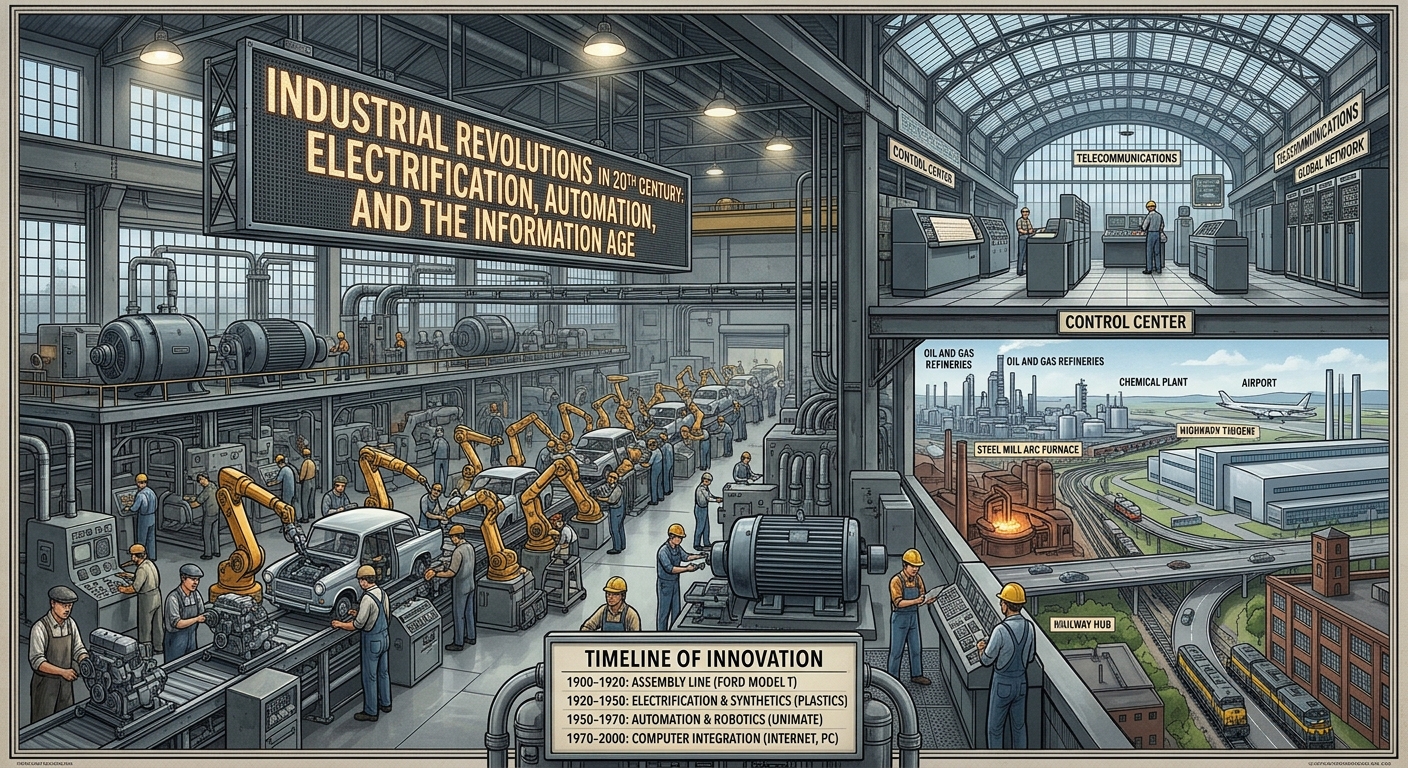
3.1 Background to Industrial Revolutions (20th & 21st Centuries)
The Four Phases of Industrial Revolution:
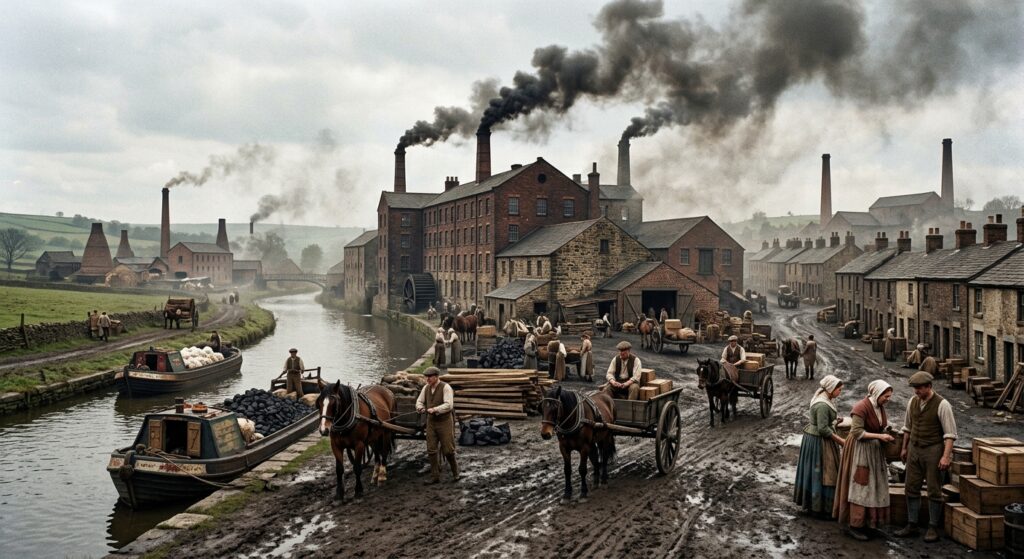
First (1760s–1840s): Steam engine, textiles, iron, coal, mechanization
Second (1870s–1910s): Steel, chemicals, electricity, internal-combustion engine
Third (1970s–late 1980s): Information technology, biotechnology, telecommunications, energy engineering
Fourth (1990s–present): AI, IoT, robotics, cyber-physical systems
Key distinction: mechanical/electrical vs. digital/biological technologies
Real example: Tanzania’s mobile money (M-Pesa, Tigo Pesa, Airtel Money) and e-Government initiatives (TRA, BRELA)
3.2 The Third Industrial Revolution (1970s–1980s)
Definition: the Digital Revolution transforming production and distribution
Four Areas of Scientific Development:
Information Technology (computers, microprocessors, chips)
Biotechnology (cloning, gene splicing, genetic modification)
Telecommunications (satellite transmissions, telematics)
Energy Engineering (nuclear, solar, wind, biomass, geothermal)
Key features: rise of IT, productivity growth, multinational corporations (MNCs), new materials (optical fibres, silicon, zirconium, beryllium), new energy sources, outsourcing, consumer/information society
Technological Innovations Table — detailed breakdown across all four fields
Effects: job losses in offices and bureaucracy, international redistribution of production (US MNCs controlled 96% of biotechnology patents), negative impact on developing countries’ agricultural exports
Real example: NIDA cards, mobile phone penetration in Tanzanian villages, natural gas in Mtwara, geothermal in Ngozi (Mbeya), TARI’s GM crop research
3.3 The Fourth Industrial Revolution (4IR)
Definition: fundamental shifts through automation and smart technology
Popularized by Klaus Schwab (WEF) in his 2016 book The Fourth Industrial Revolution
Key Technologies: Cyber-Physical Systems (CPS), Cloud Computing, Cognitive Computing, Artificial Intelligence (AI), Machine-to-Machine Communication (M2M), Internet of Things (IoT)
Characteristics: internet mobility, advanced sensors, AI/machine learning progress, fusion of virtual and physical systems, exponential growth
Impacts Table — positive and negative effects on jobs, governance, commerce, social life, and gender
Challenges for Developing Countries: expensive technologies, MNC dominance, knowledge transfer restrictions, regulatory challenges
Real example: TRA’s e-TMS, RITA online certificates, ZoomTanzania, social media in the 2020 elections, the digital divide between urban and rural Tanzania
3.4 Changes and Continuities of Industrial Revolutions
Changes Over Time Table: human muscle → mechanical power → metallurgy/electricity → computers/internet/AI; labour intensive → assembly line → capital intensive
Continuities: new technologies retain preceding ones, profit maximization goal, exploitation of labour persists
Common Trend: European/American foundations paved the way for modern industrialization in Asia, Latin America, and Africa
3.5 Industrial Revolution in Asia (Japan & Asian Tigers)
Japan’s Meiji Revolution (1868): destroyed feudalism (Tokugawa Dynasty), studied European/US systems, built schools, reorganized the army, boosted transport and light industry
The Asian Tigers (Pacific Rim): South Korea, Taiwan, Singapore, Hong Kong
Causes of Industrialization:
The Cold War (1947–1989): US aid to Taiwan and South Korea; British aid to Hong Kong and Singapore
Japan’s industrial experience as a model
Confucian cultural values (hard work, discipline, respect for authority)
Education relevant to industries (engineering and natural sciences)
Government interventions: tax incentives, export processing zones, infrastructure
Real example: Tanzania’s EPZs and SEZs (Benjamin Mkapa Industrial Park, Kigoma Industrial Park, Mtwara SEZ) and the challenges faced
3.6 Industrial Revolution in China (Since 1990s)
China as the “Workshop of the World”
Causes of Rapid Industrialization:
Special Economic Zones (SEZs) with duty-free imports
Market liberalization (market-determined prices, profit retention, labour mobility)
Privatization of State-Owned Enterprises (SOEs)
Foreign Direct Investments (FDIs) — joint ventures like Beijing-Jeep, Shanghai-Volkswagen
Technological transfer and innovation (from imitation to indigenous innovation)
Investment in education and workforce development
Impact: dominance as global producer, emerging power challenging traditional industrial nations, formation of BRICS (2009) with Egypt, Ethiopia, Iran, Saudi Arabia, and UAE joining in 2023
Real example: China as Tanzania’s largest trading partner, Ubungo Gas Processing Plant, Mtwara Development Corridor, Standard Gauge Railway (SGR), and competition with cheap Chinese imports in Kariakoo
3.7 Industrial Revolution in Latin America
U-shaped trajectory: started 1880s, declined 1980s–1990s (debt crisis and SAPs), rising again
Country Examples:
Brazil: began late 19th century after slavery, coffee export crop; heavy industries (metals, chemicals, plastics) in 1970s; electrical equipment, automobiles, aeroplanes by early 1980s
Mexico: President Miguel Aleman Valdes supported Import-Substitution Industries (ISI) in 1940s–1950s
Argentina: beef and grain exports funded meatpacking and food processing
Causes: urbanization (São Paulo), immigration (4.4 million Asian and European workers in Brazil in the 1930s)
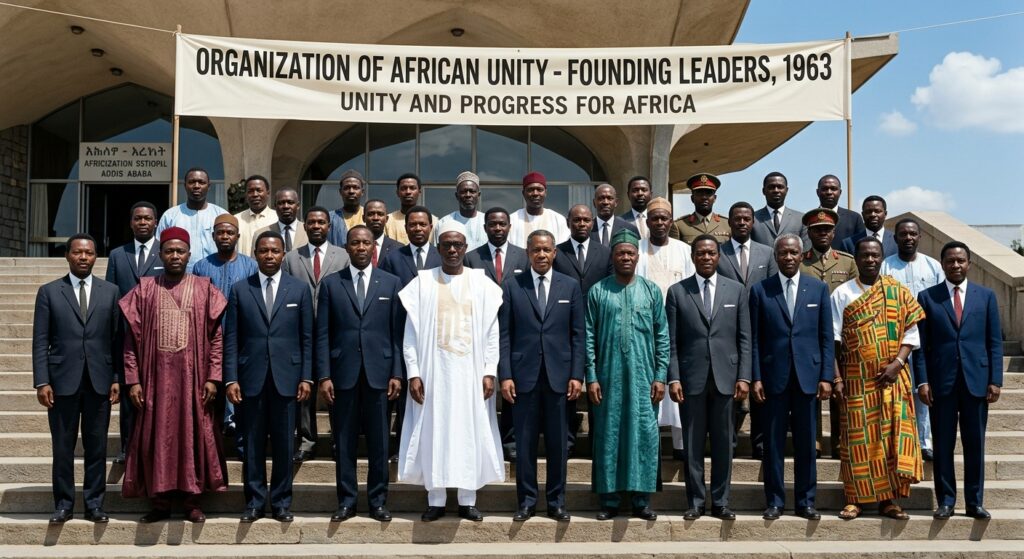
3.8 Industrial Development in Africa (1945–1960)
Before 1945: South Africa most industrialized (diamonds 1871, gold 1886); North Africa (Libya, Algeria, Egypt, Tunisia, Morocco) — oil and gas extraction by MNCs; small-scale processing elsewhere (cigarettes in Belgian Congo and Cameroon, soap in Nigeria); no industry departments in colonial governments; monocrop economies
During WWII: Import-Substitution Industries (ISIs) established because war prevented European ships from transporting consumer goods; simple consumer goods only (juice, biscuits, sweets, cigarettes); soap in Nigeria, Kenya, Southern Rhodesia, Gold Coast, Ivory Coast; brick-making and copper-smelting in Belgian Congo
Since 1960:
Ghana: Nkrumah’s “Industrialise or Perish” policy; nationalized firms; state-owned enterprises
Nigeria: Kainji Dam (irrigation and hydroelectric power); petroleum refining, cement, food processing
Kenya: Foreign Investment Protection Act (FIPA) 1964; Industrial and Commercial Development Corporation (ICDC)
Obstacles to Industrialization in Africa: colonial legacy, weak governance and corruption, droughts and oil crisis (1973), Global Financial Crisis (2008), COVID-19 pandemic (2020), insufficient investment in education and infrastructure, new technologies (AI, robotics)
Lessons for African Countries: education and skills, infrastructure, innovation, diversification, sustainable development, public-private partnerships, inclusive development, adaptability
Real example: Tanzania’s Arusha Declaration (1967), Ujamaa nationalization (TBL, TCC, Urafiki, Morogoro Shoe Factory), collapse under SAPs in the 1980s–1990s, and current revival through Vision 2025 and FYDPs
✨ Key Features
Concise Summaries — A dedicated summary section covering all 10 key takeaways at a glance
Real Examples from Tanzania — Connects global industrial revolutions to local context: mobile money, e-Government, EPZs, SGR, and the digital divide
Detailed Comparison Tables — Includes a breakdown of the four phases, 4IR impacts, changes and continuities, Asian Tiger causes, and Latin American country paths
Exam-Focused Content — Every section ends with revision questions to test and reinforce understanding
Visual Learning — Placeholders for diagrams of 4IR robots and Pacific Rim industrialized countries
📝 Comprehensive Assessment Section
Section A: Short Answer Questions (10 Questions)
Covers definitions, key figures (Klaus Schwab), the Asian Tigers, BRICS, new materials, Latin American industrialization, Nkrumah’s policy, e-government services, WWII’s role in African ISIs, and Shanghai-Volkswagen
Section B: Structured Questions (10 Questions)
Each worth 4 marks — includes questions on third industrial revolution characteristics, 4IR negative impacts, China’s rapid industrialization factors, Latin American causes, African obstacles, colonial industrial neglect, lessons for Africa, 4IR key technologies, third IR scientific areas, and new energy sources
Section C: Essay Questions (10 Questions)
Each worth 20 marks — covering the third industrial revolution’s features and effects, 4IR impacts on jobs/governance/commerce/social life, comparison of Asian Tigers and China, China’s rise as “workshop of the world,” Latin American industrialization, colonial policies and African underdevelopment, African industrialization obstacles and solutions, Tanzania’s 4IR experience, 4IR as a threat to African industrialization, and lessons from Asia and Latin America for Africa
🎯 Who This Guide Is For
Form Five and Form Six History students preparing for national examinations
Teachers seeking a well-organized reference and teaching resource
Anyone interested in understanding the digital transformation of the 20th and 21st centuries
Students preparing for regional and international examinations on modern world history and industrialization
Policymakers and development practitioners interested in Africa’s industrialization journey
⭐ Why Choose This Guide
✅ Curriculum-Aligned — Follows the official History syllabus structure
✅ Exam-Focused — Revision questions and essay practice mirror real NECTA examination formats
✅ Clear and Concise — Complex technological and economic concepts explained in simple, accessible language
✅ Comprehensive Coverage — From the Third Industrial Revolution (1970s) to the Fourth Industrial Revolution (present day)
✅ Global Perspective with Local Relevance — Covers Asia, China, Latin America, and Africa, with Tanzanian examples throughout
✅ Comparative Analysis — Detailed comparison of industrialization across Japan, the Asian Tigers, China, Latin America, and Africa
✅ Contemporary and Relevant — Addresses AI, IoT, e-commerce, social media, and the digital divide — issues shaping today’s world
Order your copy today and take control of your success!
MITIHANI POPOTE — Quality educational resources wherever you are.

Reviews
There are no reviews yet.