
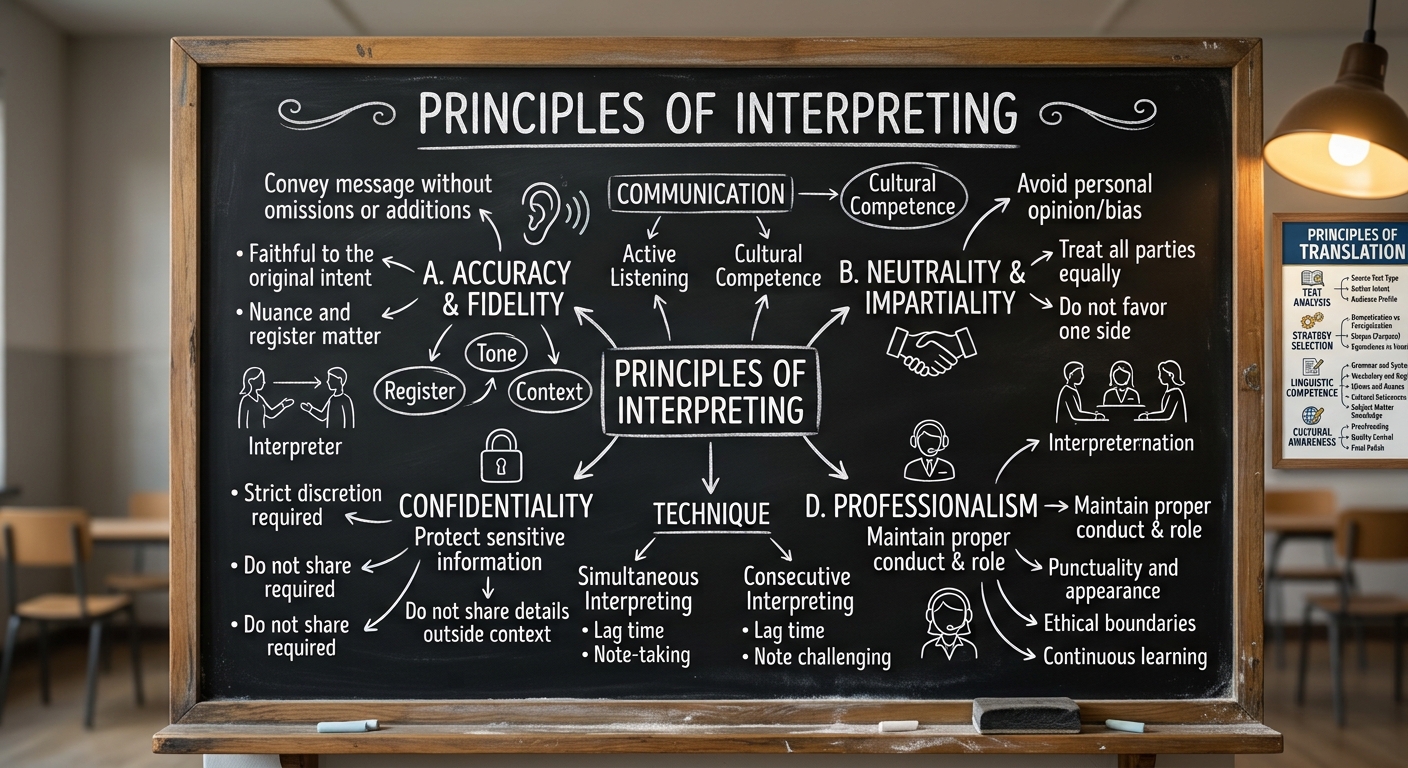
Description
PRINCIPLES OF TRANSLATION — Complete Study Guide
Advanced Level English — Form Five
A comprehensive, exam-ready resource covering everything from the ten principles of translation to CAT tools, ethics, and a real case study on professional misconduct — all in one clearly organized document.
📘 What’s Inside
1. Introduction to Principles of Translation
Clear definitions of all key terms: translation, source language (SL), target language (TL), translator, equivalence, faithfulness, cultural sensitivity, contextualization, CAT tools, translation memory, and terminology management
Five key reasons why translation matters: cross-cultural communication, professional development, academic success, social inclusion, and global understanding
2. The Ten Principles of Translation
All ten principles fully explained with key points and worked examples:
Faithfulness — accurate reflection of content and intent
Accuracy — correct facts, figures, and technical terms
Clarity and Readability — natural flow in the target language
Cultural Sensitivity — with a Tanzanian proverb example (“The early bird catches the worm” → Mwache akawa mng’ao)
Contextualization — adapting to the target audience’s context
Consistency — uniform terminology throughout (e.g., joto vs. halijoto)
Naturalness — avoiding literal translations (“raining cats and dogs” → Mvua inanyesha sana)
Transparency — honest about adaptations and limitations
Adaptation — adjusting to target culture while preserving meaning
Ethical Consideration — honesty, confidentiality, and professional integrity
3. Full Translation Analysis
Complete English-to-Kiswahili translation of “The Benefits of Artificial Intelligence”
Ten-point analysis demonstrating how each principle applies to the actual translation — showing “Akili Unde (AU)” consistently rendered and technical terms accurately conveyed
4. Computer Assisted Translation (CAT) Tools
Four key features: translation memory, terminology management, quality assurance, and integration
Full worked example: translating an Independent Contractor Agreement using CAT tools, with a six-step process and complete Kiswahili translation
5. Ethics of Translation as a Career
Five ethical considerations: accuracy, confidentiality, professionalism, cultural sensitivity, and honesty
6. Case Study: Misconduct in Translation
Full case study of Mr. Jogoo — a legal translator who paraphrased an ambiguous clause and altered its meaning
Consequences identified: tarnished reputation, legal proceedings, and irreparable professional damage
Ethical issues analysed and lessons learned
Five practical guidelines for avoiding similar mistakes, plus reflection questions
7. Summary
10 key takeaways covering the entire chapter
8. Revision Questions
Four subtopic sections (5 questions each): Introduction, Principles, CAT Tools, and Ethics
9. NECTA-Style Questions
Section A: 10 Short Answer Questions
Section B: 10 Structured Questions (with mark allocations, 5 marks per part)
Section C: 10 Essay Questions — exam-style discussion topics
10. Keywords Glossary
Complete definitions of every key term in the chapter
✅ Why This Guide Works
All ten principles demonstrated in a real translation — not just defined, but applied to a full English-to-Kiswahili text
Tanzanian examples throughout — local proverbs, business contexts, and Kiswahili terminology
Real ethics case study — Mr. Jogoo’s misconduct analysed with lessons and prevention strategies
CAT tools shown in action — a six-step translation workflow with a complete legal document
Exam-focused — NECTA-style short answer, structured, and essay questions with mark allocations
Complete coverage — from defining equivalence to ethical career practice in a single document
MITIHANI POPOTE — Quality educational resources wherever you are.



Reviews
There are no reviews yet.