
Description
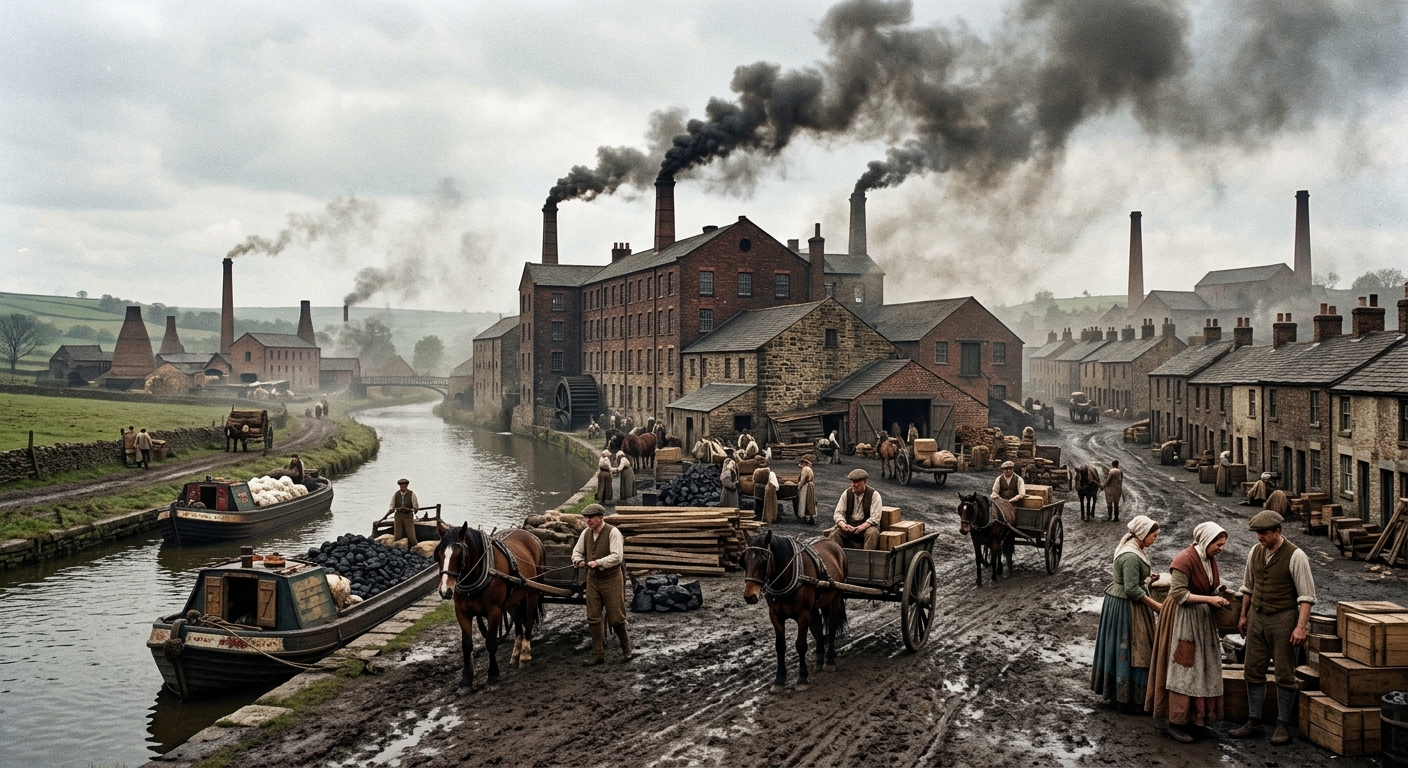
Industrial Revolution in the 18th and 19th Centuries – Comprehensive Study Guide (Form Five History)
Master the Technological, Social, and Political Transformation That Shaped the Modern World — From the Cottage System to the Factory System
This expertly structured study guide breaks down one of the most examinable and historically significant topics into clear, organized, and highly digestible sections. Whether you are preparing for national examinations, revising for class tests, or seeking a deeper understanding of how industrialization transformed Britain, Europe, and the world, this guide is your essential companion.
📖 What’s Inside
2.1 The Concept and Phases of Industrial Revolution
Clear definition: the shift from cottage system to factory system (1750s–1840s)
Key characteristics: mass production, urbanization, class dynamics, new political institutions
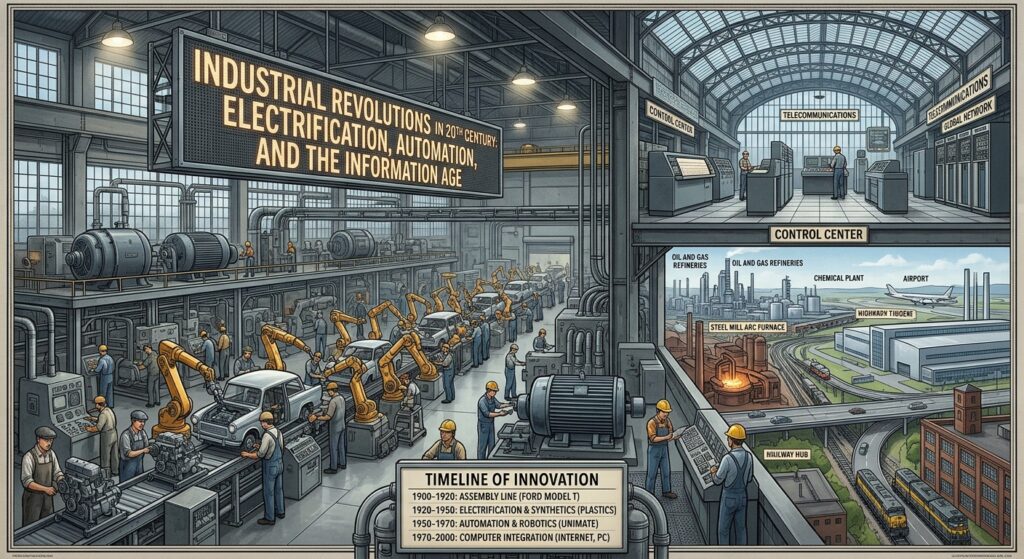
The two main phases: First (1750s–1840s, textiles and steam) and Second (1840s–1870s, steel, chemicals, electricity)
Real example: Tanzania’s colonial economy and the Tanga–Moshi Railway
2.2 The Cottage System (Putting-Out System)
Definition and features of small-scale, home-based production
The guild system and apprenticeship
The putting-out system and the role of middlemen
Proletarianisation through the enclosure system
Real example: VETA centers and informal apprenticeship in Tanzania
2.3 The Factory System (1750s–1870s)
Definition and characteristics: concentration of industries, mechanization, urbanization
Britain as the first country to industrialise — 11 detailed reasons:
Geographical position, natural resources, transport network
Agricultural revolution, capital accumulation from the slave trade
Political stability, technological innovations (Watt’s steam engine, Arkwright’s water frame)
Government support (Navigation Acts), financial institutions, demographic revolution
Entrepreneurial skills
Real example: Tanzania’s Special Economic Zones and Industrial Parks
2.4 Working-Class Movements in Britain
Definition of proletariat and working-class movements
Problems faced by factory workers: poor living conditions, long hours, low wages, child labour
Early protest methods: strikes, petitions, riots
The Combination Acts (1799 and 1800)
2.5 Luddism (Luddite Movement, 1811–1817)
Definition and causes: economic depression, crop failure, structural changes, exploitation
Organization: secretive, oath-bound, “General Ludd,” Enoch Taylor hammer
Strengths: articulate workers, selective machine-breaking, foundation for future movements
Weaknesses: no effective leader, financial constraints, limited scope
Real example: Tanzanian workers during the 1990s privatization era
2.6 The Chartist Movement (1838–1850)
Definition and the People’s Charter (1838)
The Six Chartist Demands: universal manhood suffrage, equal electoral districts, secret ballot, annual elections, abolition of property qualification, payment of MPs
Three phases: Moral (1838–1842), Physical (1842–1848), Decline (1848–1850)
Strategies: petitions (1.25M, 3M signatures), riots, strikes, The Northern Star newspaper, Land Plan Project
Causes: Reform Act of 1832, New Poor Law of 1834, economic depression
Significance and weaknesses
Real example: Chartist demands reflected in modern Tanzanian electoral reforms
2.7 New Model Trade Unionism (1850s–1870s)
Definition: skilled workers, peaceful bargaining, legal methods
Reasons for rise: failure of Chartism, mid-Victorian prosperity, labour aristocracy
Significance: improved conditions, government recognition, large funds, foundation for the Labour Party
Weaknesses: excluded unskilled labourers, focused only on economic interests
Real example: TUCTA and CHODAWU in Tanzania
2.8 The Second Phase of Industrial Revolution (1840s–1870s)
Features: steel, chemicals, electricity, internal-combustion engine
Spread of industrialization:
Belgium — second country to industrialize (John Cockerill, Liege)
France — slower due to political revolution and Napoleonic wars
Germany — rapid after unification (1871), surpassed Britain in steel by 1890s
USA — after Civil War (1861–1865), first-generation capitalists (Rockefeller, Morgan, Vanderbilt)
Comparison of industrialization across nations
2.9 Impact of Industrial Revolution
Socio-economic: decline of feudalism, rise of bourgeoisie and proletariat, expansion of banking, transformation of work experience, urbanization
Political: colonial expansion and the Scramble for Africa, abolition of slavery and legitimate trade, laissez-faire, military revolution
Global: stiff competition among industrial nations, transfer of wealth and power
Real example: German colonization of Tanganyika and the Central Railway Line (1905–1914)
✨ Key Features
Concise Summaries — A dedicated summary section covering all 10 key points at a glance
Real Examples from Tanzania — Connects industrial revolution history to local context for better understanding
Detailed Comparison Tables — Includes a clear breakdown of industrialization in Belgium, France, Germany, and the USA
Exam-Focused Content — Every section ends with revision questions to test and reinforce understanding
Visual Learning — Placeholder for diagrams of key inventions (steam engine, spinning jenny)
📝 Comprehensive Assessment Section
Section A: Multiple Choice Questions (10 Questions)
Covers definitions, key figures, dates, and essential facts — from the cottage system and steam engine to Luddism, Chartism, and laissez-faire
Section B: Structured Questions (10 Questions)
Each worth 4 marks — includes questions on reasons for Britain’s industrial leadership, features of the cottage system, causes of Luddism, Chartist demands, characteristics of the second industrial revolution, and weaknesses of New Model Trade Unionism
Section C: Essay Questions (10 Questions)
Each worth 20 marks — covering Britain’s industrialization factors, the Luddite movement as a reaction to exploitation, the significance of Chartism, comparison of industrialization in Britain, Germany, and the USA, social and economic impacts on the working class, the transition from cottage to factory system, and how the industrial revolution affected African colonies like Tanzania
🎯 Who This Guide Is For
Form Five and Form Six History students preparing for national examinations
Teachers seeking a well-organized reference and teaching resource
Anyone interested in understanding the technological, social, and political transformation that shaped the modern world
Students preparing for regional and international examinations on European and African history
⭐ Why Choose This Guide
✅ Curriculum-Aligned — Follows the official History syllabus structure
✅ Exam-Focused — Revision questions and essay practice mirror real examination formats
✅ Clear and Concise — Complex historical concepts explained in simple, accessible language
✅ Comprehensive Coverage — From the cottage system of the 1750s to the global impact of industrialization
✅ Practical Examples — Tanzanian and regional examples bring the content to life
✅ Comparative Analysis — Detailed comparison of industrialization across Britain, Belgium, France, Germany, and the USA
Order your copy today and take control of your success!


Reviews
There are no reviews yet.