
Description
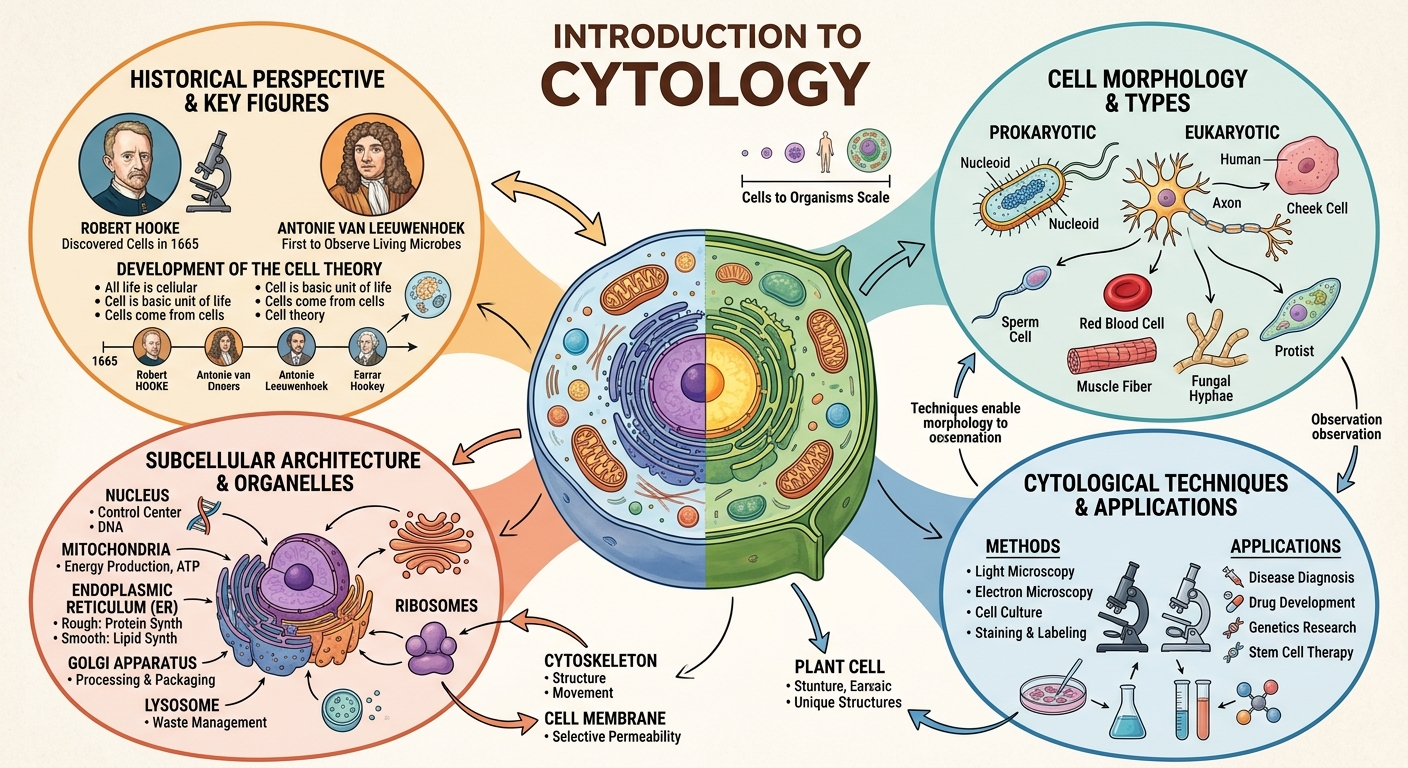
CYTOLOGY — Comprehensive Study Notes
A-Level Biology — Form Five
A comprehensive, exam-ready resource covering cell theory, cell structure and types, biochemistry, and water as a cell constituent — all in one clearly organized document.
📘 What’s Inside
1. Concept of Cytology
Definition of cytology and the cell as the basic unit of life
Cellular hierarchy from organelles to organism
Why cytology matters — growth, inheritance, metabolism, disease, and biotechnology
Magnification calculations including the magnification formula, microscope total magnification, and resolution explained
Unit conversions (mm → µm → nm) and drawing conventions
2. The Cell Theory
All three classical tenets explained with supporting evidence
Modern extensions: DNA inheritance, energy flow, and similar chemical composition
Exceptions addressed — viruses, multinucleate muscle fibres, and mature red blood cells
Labelled schematic diagram of a generalized eukaryotic cell
3. Types of Cells
Prokaryotic vs. eukaryotic cells with a detailed comparison table covering size, nucleus, DNA, organelles, ribosomes, division, and examples
Plant vs. animal cells comparison table covering cell wall, chloroplasts, vacuole, shape, centrioles, and lysosomes
4. Cell Organelles and Functions
All major organelles covered: plasma membrane, cell wall, cytoplasm, nucleus, mitochondria, chloroplasts, ribosomes, rough and smooth ER, Golgi apparatus, lysosomes, vacuoles, centrosomes, cytoskeleton, cilia/flagella, and peroxisomes
Cell specialisation examples: red blood cell, neuron, root hair cell, palisade mesophyll, sperm cell, and muscle cell — each with adaptations explained
5. Organic Constituents (Biochemistry)
Carbohydrates: mono-, di-, and polysaccharides with functions
Lipids: triglycerides, phospholipids, and steroids with ester bonds explained
Proteins: all four levels of structure (primary → quaternary) with functions
Enzymes: catalytic mechanism, induced-fit model, and factors affecting activity
Nucleic acids: DNA and RNA structure, complementary base pairing, and semi-conservative replication
ATP and vitamins/minerals explained
Complete food test table: starch, reducing sugar, protein, and lipid with reagents and positive results
6. Water as a Constituent of the Cell
Properties of water explained: polarity, hydrogen bonding, cohesion, adhesion, high specific heat capacity, and latent heat of vaporisation
Biological roles: solvent, reactant, temperature buffer, and support for xylem transport
Osmosis fully explained: hypotonic, hypertonic, and isotonic solutions for both plant and animal cells
Turgidity, flaccidity, and plasmolysis distinguished
Water potential formula (Ψ = Ψs + Ψp) with reference values
Osmosis schematic diagram
7. Practical Skills and Exam Application
Worked magnification calculations with actual examples
Drawing and scale bar conventions
Practical report structure (aim through limitations) and experimental design guidance
8. Common Exam Distinctions
Eight key comparisons clearly distinguished:
Cell wall vs. plasma membrane
Prokaryote vs. eukaryote
Rough vs. smooth ER
Starch vs. glycogen
DNA vs. RNA
Diffusion vs. osmosis
Active transport vs. facilitated diffusion
9. Revision Questions
15 revision questions covering definitions, comparisons, calculations, food tests, and osmosis — plus 3 longer discussion questions
10. Quick Revision Checklist
10-point self-assessment checklist to track readiness
11. Source Alignment
Notes organised to match the Form Five Biology syllabus chapter structure
✅ Why This Guide Works
Labelled diagrams included — generalized eukaryotic cell and osmosis schematic
Every comparison tabulated — prokaryote/eukaryote, plant/animal, and eight exam-critical distinctions
Structure-to-function links throughout — how each organelle’s form enables its job
Calculations worked step by step — magnification and actual size with real examples
Exam-focused — common distinctions, revision questions, and a self-assessment checklist
Complete coverage — from cell theory to water potential in a single document
MITIHANI POPOTE — Quality educational resources wherever you are.


Reviews
There are no reviews yet.