
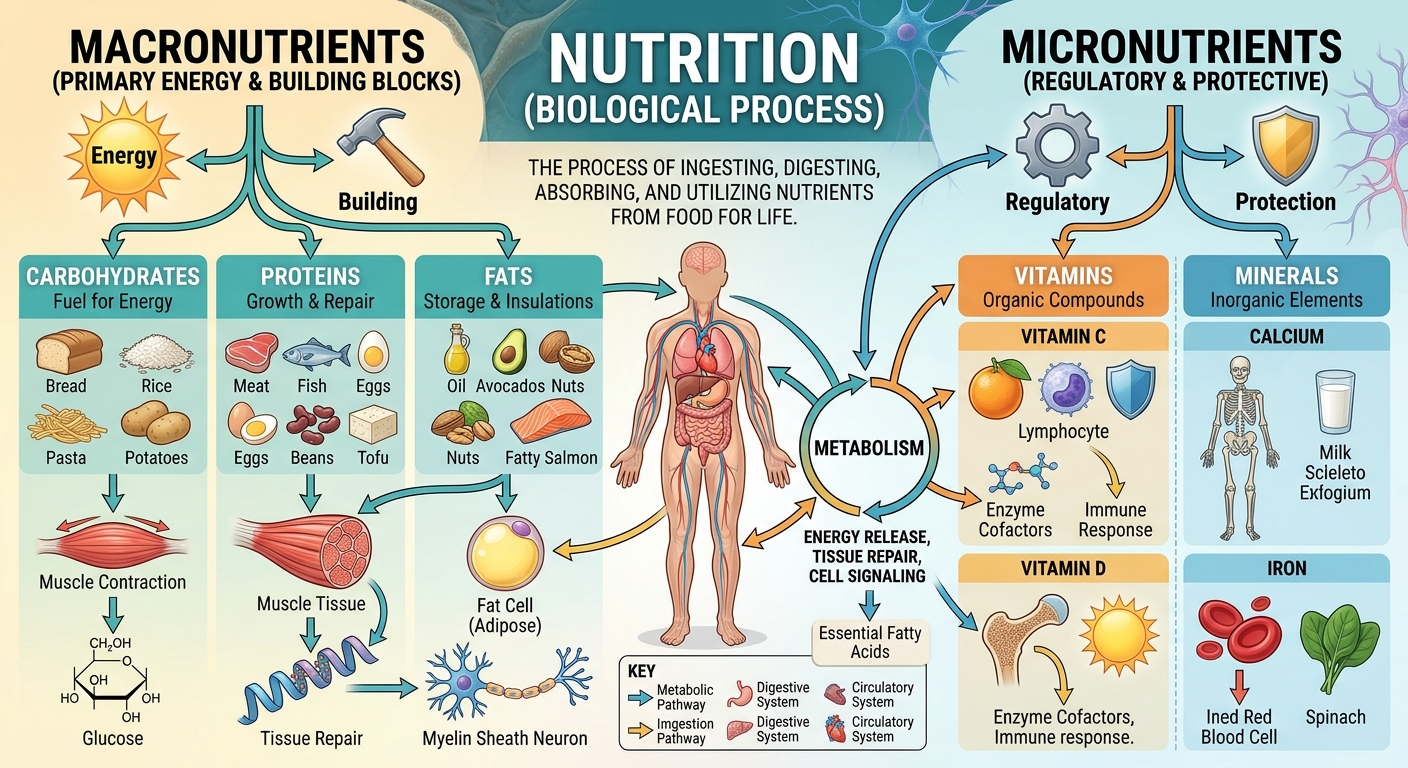
Description
NUTRITION — Comprehensive Study Notes
A-Level Biology — Form Five
A comprehensive, exam-ready resource covering autotrophic and heterotrophic nutrition, photosynthesis, mineral nutrition, digestion, absorption, and assimilation — all in one clearly organized document.
📘 What’s Inside
1. Meaning and Types of Nutrition
Clear definitions of all key terms: nutrition, ingestion, digestion, absorption, assimilation, ejection, and excretion
Nutritional modes table: autotrophic, heterotrophic, holozoic, saprotrophic, parasitic, and symbiotic
2. Autotrophic Nutrition and Photosynthesis
Definition and overall equation with labelled diagram (sunlight → chloroplast → glucose, CO₂, H₂O, O₂)
Raw materials and requirements: CO₂, water, light, chlorophyll, and temperature
Labelled leaf cross-section diagram with all adaptations explained (cuticle, epidermis, palisade, spongy mesophyll, stomata, veins)
Chloroplast structure — stroma, thylakoids, grana, and lumen
3. Stages of Photosynthesis
Light-dependent reactions fully explained — photolysis, electron transport, photophosphorylation, and NADP reduction
Calvin cycle fully explained — RuBisCO, 3-PGA reduction, triose phosphate, and RuBP regeneration
Importance of photosynthesis — five key points
Factors affecting rate table: light intensity, CO₂ concentration, temperature, wavelength, and water
Limiting factors explained with graph interpretation
4. Mineral Nutrition in Plants
Mineral ion table — nitrate, magnesium, phosphate, potassium, calcium, and iron with roles and deficiency symptoms
Labelled nitrogen cycle diagram — fixation, nitrification, assimilation, ammonification, and denitrification
5. Heterotrophic Nutrition
Holozoic nutrition stages table with human examples (ingestion through egestion)
6. Food Classes and Their Functions
Food class table — carbohydrates, proteins, lipids, vitamins, minerals, water, and dietary fibre
Vitamin and mineral deficiency table — vitamin A, B1, C, D, K, iron, iodine, and calcium
Balanced diet principles
7. The Mammalian Alimentary Canal
Labelled alimentary canal diagram from mouth to large intestine
Functions of major regions table — mouth through rectum and anus
8. Mechanical and Chemical Digestion
Complete digestive enzymes table — source, substrate, products, and suitable conditions for all enzymes
Role of bile — emulsification and neutralisation (with the key point that bile contains no enzymes)
Peristalsis explained
9. Absorption in the Small Intestine
Labelled villus diagram showing epithelium, capillaries, and lacteal
Adaptations of a villus explained
Absorption routes table — glucose, amino acids, fatty acids, vitamins, and water
10. Assimilation and Metabolic Use of Nutrients
How glucose, amino acids, fatty acids, vitamins, and water are used
Deamination and urea formation explained
11. Food Tests and Practical Investigations
Complete food test table — starch, reducing sugars, non-reducing sugars, protein, lipid, and vitamin C
Food-test sequence diagram
Six-step protocol for investigating photosynthesis (starch test in a leaf)
Light intensity investigation using Elodea
Safety and reliability guidance
12. Nutrition in Microorganisms and Other Organisms
Table covering fungi, Amoeba, Paramecium, Euglena, Cuscuta, and legume-Rhizobium associations
13. Comparing Autotrophic and Heterotrophic Nutrition
Comparison table across carbon source, energy source, chlorophyll, dependence, and examples
14. Common Misconceptions and Examination Tips
Eight common errors explicitly corrected — e.g., bile doesn’t chemically digest fats, plants respire too, oxygen comes from water
15. Key Vocabulary for Revision
Complete glossary
16. Examination Practice Questions
10 short-answer questions
7 structured/essay questions with full mark allocations
17. Suggested Answer Points
Model essay structures for photosynthesis, digestion, and absorption questions
18. Final Revision Checklist
Eight-point self-assessment to track readiness
19. Scope and Source Note
✅ Why This Guide Works
Six labelled diagrams — photosynthesis flow, leaf cross-section, nitrogen cycle, alimentary canal, villus, and food-test sequence
Every process shown in stages — light reactions, Calvin cycle, holozoic nutrition, and peristalsis
All major comparison tables — nutritional modes, mineral ions, enzymes, absorption routes, and autotrophic vs. heterotrophic
Practical work included — food tests and photosynthesis investigations with variables and safety
Common misconceptions explicitly corrected — turning frequent lost marks into easy wins
Exam-focused — practice questions, suggested answer points, and a revision checklist
Complete coverage — from photosynthesis to urea formation in a single document
MITIHANI POPOTE — Quality educational resources wherever you are.

Reviews
There are no reviews yet.