
Description
CHAPTER 4: NEW THREATS TO WORLD PEACE AND SECURITY
📚 Complete Study Guide — Comprehensive, Exam-Focused Notes
🔥 WHY THIS GUIDE IS ESSENTIAL
The world has changed. The enemies of peace are no longer just armies massing at borders — they are hackers hidden behind screens, terrorist networks operating across continents, traffickers exploiting the vulnerable, and climate-induced crises that spark conflict before anyone fires a shot. From the devastation of 9/11 to the silent paralysis of Estonia’s digital infrastructure, from the kidnap gangs of Nigeria to the disinformation campaigns that sway elections — the threats of the 21st century are subtler, more asymmetric, and more deeply woven into the fabric of everyday life than ever before.
This guide transforms a complex, densely packed chapter into a clear, structured, and exam-ready study companion. Whether you are a student aiming for top grades, a teacher building lesson content, or a curious mind seeking to understand the dangers that define our era — this guide is your definitive resource.
🎯 WHAT THIS GUIDE COVERS
Introduction: The Concept of New Threats
Clear learning objectives — from understanding the concept and causes to exploring strategies for sustainable, collaborative solutions
Key theme: Terrorism, cyber security, and radicalism
Definition — dangers that extend beyond conventional military conflicts and inter-state rivalries
Key characteristics — subtler and more asymmetric, often involving non-state actors, targeting technology, ideology, and psychology, and challenging states and international institutions in novel ways
Traditional vs. New Threats — The Complete Comparison
Full comparison table covering open warfare vs. ideologically driven violence, arms races vs. asymmetric warfare, interstate wars vs. cybersecurity breaches, territorial conquest vs. radicalization, state actors vs. non-state actors, overt military force vs. unconventional weapons and tactics, and territorial integrity vs. vulnerability, marginalization, influence, and psychological disruption
Modern Security Challenges
Unconventional security challenges — escalating geopolitical tensions, Grey-Zone Warfare (GZW), the AI arms race, rising insider threats, fragmented extremism, and organizations becoming unintended casualties of military conflicts
Grey-Zone Warfare tactics — sabotage, cyberattacks, election interference, and covert operations
Information disorder — misinformation (false, no intent to harm), disinformation (deliberately false, intent to harm), and malinformation (genuine information shared to cause harm)
Social media threats — doxing, amplifying threats, and spreading false information
Government responses — increased defence spending in the post-Cold War era, collaborative military readiness projects (USA, Britain, Japan, China, Germany, France, Poland, Canada, Italy)
Origin of New Threats to World Peace and Security
Pre-modern and early modern eras — wars of conquest, dynastic rivalries, inter-territorial border conflicts, imperial expansion (Napoleonic Wars), and the two world wars of the 20th century
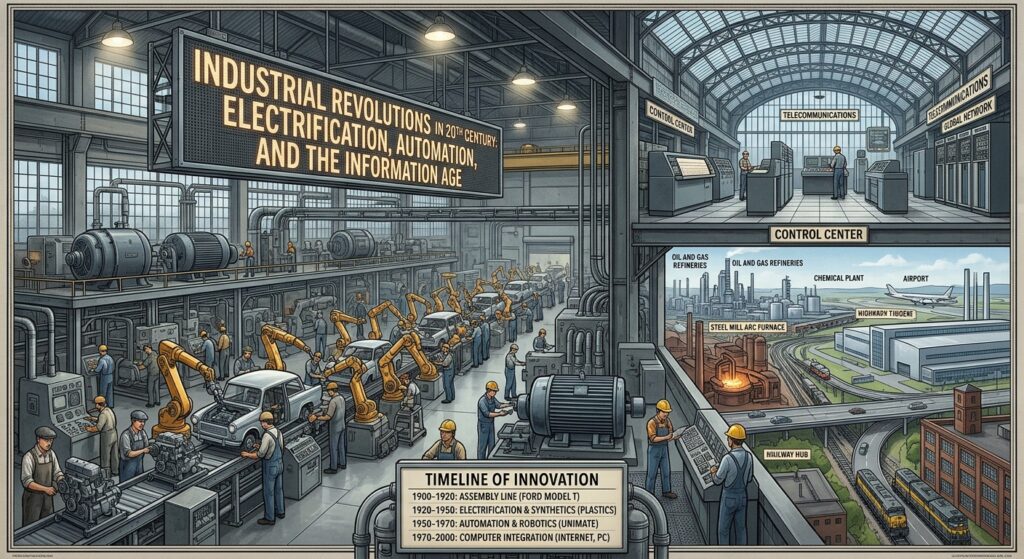
The Industrial Revolution — mechanized, technologically advanced warfare, poisonous chemicals, gases, biological agents, and thriving international trade that allowed instability to cross borders
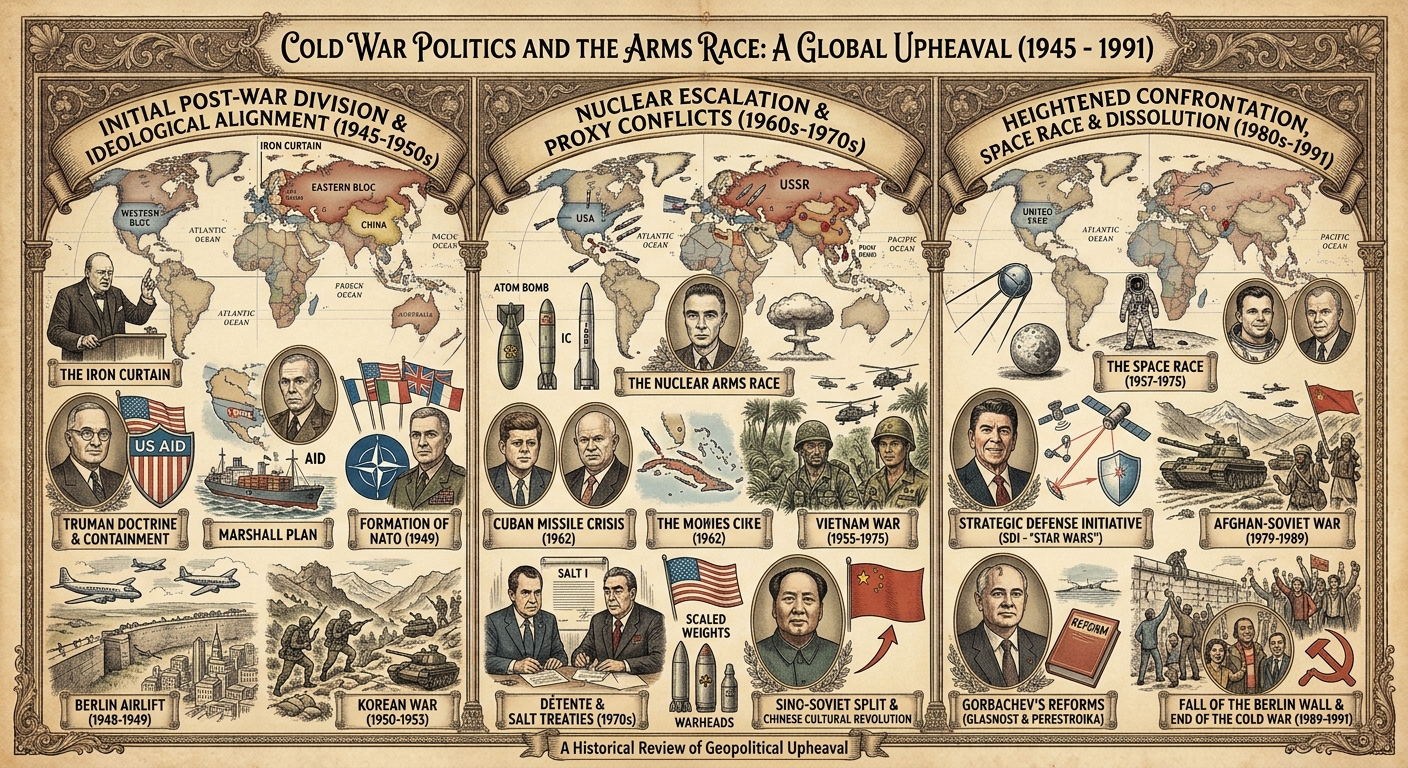
Cold War transformation — proxy wars, espionage, ideological competition, and the nuclear arms race introducing mass destruction without direct conflict
Late 20th century onwards — transnational terrorism (Al-Qaeda), the September 11th attacks demonstrating non-state actors could destabilize global peace, and international criminal cartels exploiting globalization (drug trafficking, human trafficking, arms smuggling)
Early 21st century — globalization and technological revolutions intensifying cyberwarfare, disinformation campaigns, and surveillance technologies
Notable cyberattacks — Estonia (2007) and Ukraine, showing states could be paralysed without a single bullet being fired
Emerging concerns — artificial intelligence, drones, biotechnology, autonomous violence, and bioengineered risks
Climate change and pandemics as security concerns — the Darfur crisis linked to desertification, and the COVID-19 pandemic triggering migration, economic collapse, and violent conflict
Causes of New Threats — All Eleven Explored in Depth
End of Cold War and Geopolitical Reconfiguration — the collapse of Eastern European communist regimes (1989), the fall of the Berlin Wall, German reunification (1990), and the disintegration of the USSR (1991); the power vacuum in Eastern Europe and Central Asia; Russia’s perception of NATO expansion as a direct threat; and the resulting regional conflicts, proxy confrontations, espionage, terrorism, cyber warfare, and weapons proliferation
Rise of Anti-Americanism — the promotion of US neoliberal values (democracy, human rights, market-oriented policies), the clash with local traditions in the Middle East, Africa, and parts of Asia, and the consequences of radicalism and terrorism among youth in the Middle East and North Africa
Rise of China as a Global Power — competition in cyberspace, outer space, artificial intelligence, and digital economies; cybersecurity threats, intellectual property theft, and technological espionage; territorial disputes in the South China Sea; and strategic competition with the US over raw materials, markets, and investments
Economic Inequality and Poverty — affected regions in Africa and Latin America; human trafficking, organized crime, and irregular migration; economic instability in Venezuela, Bolivia, Colombia, and Brazil; and the resulting human mobility crises and regional insecurity
Post-Socialist Transitions in Eastern Europe — transforming socialist economies to market-oriented ones; the failure to secure sound economic support from Western Europe, the IMF, and the World Bank; distressed populations, youth unemployment, rising unemployment, and fragile economies; and population movements facilitating human trafficking and cross-border criminal activity
Geopolitical Fragmentation — rivalries among the United States, China, and Russia; competing blocs and intensified strategic competition affecting trade, technology, and regional security; state-sponsored cyber operations, hybrid warfare, and proxy conflicts
Weakening of Global Norms and Institutions — UN failures to prevent aggression, civil wars, and asymmetric conflicts; limited enforcement of international law (the annexation of Crimea, 2014); rising authoritarianism; and emboldened states acting aggressively in the name of protecting national interests
Technological Advances — cyberattacks, AI-driven military strategies, and automated weapon systems; cyber warfare capabilities disrupting critical infrastructure, banking, and government data servers, influencing elections, and facilitating espionage
Disinformation and Misinformation Campaigns — digital platform manipulation by state and non-state actors; destabilizing governments and polarizing societies; linked to radicalism, political destabilization, societal fragmentation, and the undermining of trust in institutions
Environmental Degradation and Climate Change — threat multipliers including extreme weather events, droughts, floods, resource scarcity, and climate-induced migration; exacerbating social tensions and local conflicts spilling across borders; indirectly precipitating terrorism, radicalization, and mass migration
Biosecurity Risks and Global Health Threats — pandemics, antimicrobial resistance, and the misuse of biotechnology; the COVID-19 pandemic disrupting economies, causing social unrest, and exacerbating existing conflicts
New Threats to World Peace and Security — The Five Major Categories
💣 1. Terrorism and Extremism (Radicalism)
Definitions — terrorism (the use of violence to achieve political, religious, or ideological objectives, often targeting civilians to instill fear) and extremism (holding radical views that justify such violence)
Major terrorist incidents:
September 11, 2001 Attacks (USA) — Al-Qaeda, four hijacked planes, the World Trade Centre, the Pentagon, and Pennsylvania; nearly 3,000 killed; one of the deadliest terrorist attacks in history
East Africa Embassy Bombings (1998) — Al-Qaeda, Nairobi (Kenya) and Dar es Salaam (Tanzania); about 224 died and more than 4,500 wounded
Types of extremism:
Islamist Extremism — ISIS, Boko Haram, Al-Qaeda
Far-Right Extremism — the United States and Western Europe; violence targeting minorities and immigrants
Ethno-Nationalist Terrorism — Tamil Tigers (Sri Lanka), ETA (Spain), IRA (Ireland)
Exploitation factors — political instability, social inequalities, ideological divides, and the recruitment and radicalization of individuals
🚨 2. Human Trafficking
Definition — a grave violation of human rights and a significant threat to global security; illegal trade in people through forced labour, sexual exploitation, and involuntary servitude
Characteristics — traffickers preying on vulnerable populations, exploiting economic disparities and weak legal frameworks; disproportionately affecting women and children
Statistics (UNODC Global Report on Trafficking in Persons 2024) — over 133,000 victims identified in 2023; notable increases in online sexual exploitation and forced criminality
Hotspots — Southeast Asia and parts of Africa due to poor socio-economic conditions and conflict
Impacts — violating human rights, fueling organized crime, destabilizing societies, and challenging international security and human rights protection
💻 3. Cybersecurity and Information Warfare
Overview — cyberattacks disrupting critical infrastructure, stealing sensitive data, and undermining public trust; information warfare including disinformation and propaganda
Types of cyber threats:
State-Sponsored Cyberattacks — groups such as China’s “Salt Typhoon” targeting critical infrastructure in more than 80 countries
Election Interference — foreign entities influencing elections through cyber tactics, disinformation, and hacking electoral systems
Ukraine (May 2014) — hackers disrupted the presidential election, released hacked emails, attempted to modify vote counts, conducted DDoS attacks, and planted a fake graphic on the election commission’s website
United States (2016 Election) — Democrats accused Russia via operation “Project Lakhta”; Sofacy malware, intrusion into voting systems, thousands of fake social media accounts, and disinformation spread through social media (“Russiaigate,” 2013–2017)
Ransomware Attacks — cybercriminals extorting money from organizations and disrupting services
Kidnapping and Banditry — common since the post-Cold War era, especially during civil wars; affected countries including Nigeria, Ethiopia, Sudan, Mali, Somalia, and the Central African Republic
Examples — Kaduna State, Nigeria (December 2025) with a demand of N40 trillion, 11 Hilux Toyota buses, and 150 motorcycles; Sokoto State (15 Quranic students, N20 million ransom); Kuriga community (over 200 students and teachers kidnapped during morning assembly)
High-profile victims — politicians, religious leaders, businesspeople, and prominent society figures
Case Example: Chief Samuel Oluyemisi Falae (2015) — the 1999 Nigerian presidential candidate kidnapped on his 77th birthday; 100 million Naira ($500,000) ransom; released 24th September 2015; kidnappers sentenced to life imprisonment (2017)
Technology used — sophisticated technology to make calls and avoid detection by bouncing calls off multiple towers
Government responses — increased budget allocations for modern technologies, satellite upgrades, training for enhanced security monitoring, and cooperation with global powers through military alliances, joint operations, and security mechanisms
⚔️ 4. Asymmetric Warfare
Definition — conflict between parties with unequal military capabilities, where the weaker side relies on unconventional tactics
Tactics — guerrilla tactics, ambushes, cyberattacks, and psychological operations
Examples:
Russia-Ukraine Conflict — cyberattacks and unmanned surface vehicles to counter superior military strength
Middle Eastern Conflicts — Hezbollah, Hamas, and Houthis using rocket attacks and tunnel warfare against more technologically advanced adversaries (Israel)
Sahel Region (Africa) — insurgent groups employing hit-and-run tactics and exploiting local grievances
Impact on military strategy — complicating traditional strategies and requiring adaptive responses through intelligence gathering, counterinsurgency operations, and diplomatic efforts
🌍 5. Climate Change
Overview — threatening global security, worsening conflicts over resources (food and water), driving mass migration, destabilizing economies, and undermining state capacity
Effects — heightened risk of social unrest, political instability, and direct violence
Examples — more frequent and intense droughts devastating agriculture, intensifying competition for scarce freshwater resources, and clashes between herders and farmers in sub-Saharan Africa
Resource scarcity — food insecurity, water scarcity, and competition for arable land
Migration — climate-induced displacement, cross-border movement, strain on host communities, and the potential for conflict
Differences Between Traditional and New Threats — The Complete Comparison
Aspect Traditional Threats New Threats
Nature State-centric, militaristic, conventional means Non-state actors, technological vulnerabilities, environmental stressors
Character Transparent, overt armies, clear enough for response, established mechanisms Opacity, ambiguity, not always clearly attributable, hybrid warfare
Patterns Regular military patterns, predictable, usually declared, front lines Irregular, unpredictable, undeclared, no front lines
Tools Conventional military force Unconventional, technological, and informational tools
Impact Physical destruction, loss of territory, battlefield casualties, state boundaries Digital disruption, loss of data, civilian casualties, global networks
Strategies to Overcome New Threats — All Ten Explored in Depth
Strengthening International Arms Control and Disarmament — reviving and modernizing the INF Treaty (1987), START I (1991), and the NPT (1970); transparency measures including mutual inspections, open data sharing, and the Open Skies Treaty
Forging Cybersecurity Norms and Building Cyber Resilience — the UN-backed International Multilateral Partnership Against Cyber Threats (IMPACT); establishing cyber peacekeeping and Cyber Buffer Zones (CBZs)
Leveraging AI for Cyber Diplomacy and Security — predictive intrusion detection, real-time risk analytics, and integration with policy measures; faster and more effective responses to cyber threats; resilience against “cyber shadows”
Enhancing Peace Operations Through Targeted Mandates and Local Partnerships — avoiding overly broad mandates, favouring focused and resource-aware strategies, employing intelligence and digital tools, and involving women and regional organizations
Strengthening Regional Security Architectures — ASEAN, the African Union, NATO, and others; prevention platforms, conflict management, engaging local stakeholders, and preventive diplomacy
Promoting Dialogue, Diplomacy, and Multilateralism — sustained and inclusive dialogue, China’s reaffirmation of multilateralism, respect for all legitimate security concerns, and peaceful dispute resolution; regional successes such as ASEAN’s South China Sea Code of Conduct
Investing in Peace Education, Empathy, and Global Citizenship — “Peace begins with education”; peace curricula prioritizing empathy, citizenship education, and mutual respect; initiatives such as the Kaduna Peace Commission (Nigeria) with interfaith and intercultural outreach
Ensuring Justice, Inclusivity, and the Rule of Law — justice mechanisms, inclusive governance, and transitional justice models; Colombia’s 2016 peace accord as an example of addressing past abuses and promoting reconciliation
Addressing Non-Traditional Threats (Climate Change, Health, Environment) — reinforcing global institutions, the Paris Agreement on climate resilience, and investing in pandemic preparedness
Securing Critical Infrastructure Against Hybrid Threats — sabotage of undersea cables, GPS interference, and attacks on infrastructure; multi-layered defence and the European Union approach as an example
📝 Revision Exercise 4 — 11 Complete Questions
Covering:
How the demise of the Cold War contributed to new threats
Comparing and contrasting traditional and new threats
How the shift from ideological conflicts to economic and environmental crises changed global insecurity
The nature and character of new threats today
How poor governance leads to national and regional insecurity (Global South examples)
How modern science and technology can both promote and threaten world peace
Appraising global organizations’ efforts in addressing traditional and new threats
How terrorism undermines world peace in Africa and the Middle East
How international cooperation can overcome global threats
How the UN fights terrorism globally
Innovative strategies for states and international institutions to counter new threats
📌 Key Revision Points
Summary of New Threats table — violence (terrorism, extremism, asymmetric warfare), crime (human trafficking, organized crime), technology (cyberattacks, cyberwarfare, AI arms race), information (disinformation, misinformation, malinformation), environment (climate change, resource scarcity), health (pandemics, biosecurity risks), political (geopolitical fragmentation, weak institutions), and economic (inequality, poverty, economic instability)
Comparison with Traditional Threats table — actors, domain, tactics, clarity, and response
✨ WHY THIS GUIDE STANDS OUT
Feature Benefit
Complete chapter coverage Every section, cause, threat type, and strategy is included
Structured for revision Clear headings, numbered lists, tables, and bullet points
Exam-focused 11 revision questions that mirror real examination formats
Historical depth Dates, incidents, statistics, and case studies all precisely recorded
Conceptual clarity Complex ideas — grey-zone warfare, asymmetric warfare, information disorder, hybrid threats — broken down into digestible explanations
Comparative analysis Traditional vs. new threats comparison tables; all five major threat categories
Global perspective Covers Africa, the Middle East, Asia, Europe, and the Americas
Ready to use Perfect for students, teachers, and independent learners alike
📖 WHO IS THIS FOR?
Students preparing for history, civics, and international relations examinations at secondary and tertiary levels
Teachers looking for well-organized, comprehensive teaching material
Researchers needing a quick yet thorough reference on contemporary security threats
Lifelong learners curious about the dangers that define the 21st century
🚀 HOW TO USE THIS GUIDE
Start with the Introduction to understand the concept and key characteristics of new threats
Read each section sequentially — the guide builds knowledge progressively
Use the comparison tables for quick revision of traditional vs. new threats
Work through the 11 revision questions to test your understanding
Refer back to specific sections when you need quick revision on a particular threat
Compare and contrast the five major threat categories to understand their interconnected nature
💡 KEY TAKEAWAYS YOU WILL MASTER
How the end of the Cold War created a power vacuum that gave rise to new, asymmetric threats
How terrorism and extremism — from 9/11 to the East Africa embassy bombings — transformed global security
How human trafficking exploits the vulnerable and destabilizes societies
How cybersecurity and information warfare have made the digital realm a new battlefield — from Estonia (2007) to election interference in Ukraine and the US
How asymmetric warfare allows weaker parties to challenge superior military powers
How climate change acts as a threat multiplier, driving conflict over resources and mass migration
How economic inequality, weak institutions, and geopolitical fragmentation fuel insecurity
How disinformation and misinformation undermine trust in institutions and polarize societies
How biosecurity risks and pandemics — like COVID-19 — can disrupt economies and exacerbate conflicts
How ten comprehensive strategies — from arms control to peace education — can address these threats
How to analyze and answer exam-style questions with confidence
📌 FINAL WORD
This guide is your complete companion to understanding the new threats that define our era — from the terrorists who strike without warning to the hackers who paralyse nations without firing a bullet, from the traffickers who exploit the vulnerable to the climate shifts that spark conflicts over scarce resources. Everything you need is here, organized, explained, and ready for your success.
MITIHANI POPOTE — Quality educational resources wherever you are.

Reviews
There are no reviews yet.